Cordless Ratchet vs Impact Wrench: Which Do You Need? (November 2026)
The cordless ratchet vs impact wrench choice comes down to the job: choose a ratchet for tight access and repeated spinning, or an impact wrench for demanding loosening. Neither replaces a torque wrench for precise final tightening.
On this page (12 sections)
- Cordless ratchet vs impact wrench: what is the difference?
- Which tool suits your regular repairs?
- Who should buy the Milwaukee 2457-20?
- Who should buy the DeWalt DCF921B?
- How should you compare torque figures?
- How do you check whether the tool will fit?
- What else do you need before buying?
- How should you set up and use each tool?
- What mistakes cause damage or wasted effort?
- How do you care for a cordless ratchet or impact wrench?
- Do you need both tools or just one?
- Cordless ratchet vs impact wrench: which should you buy?
Choose a cordless ratchet for cramped spaces and repeated spinning, or an impact wrench for demanding loosening and fastening. The cordless ratchet vs impact wrench decision starts with the fasteners you handle most often, not the biggest torque figure.
For ChattyCrock readers choosing between these 2 tools, the Milwaukee 2457-20 fits routine engine-bay work. The DeWalt DCF921B is the stronger option for accessible, tight fasteners, including wheel work where the vehicle's procedure allows impact use.
Neither tool replaces a torque wrench for precise final tightening.
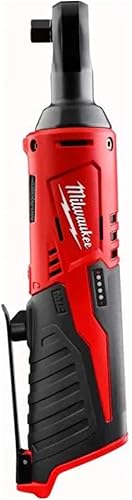
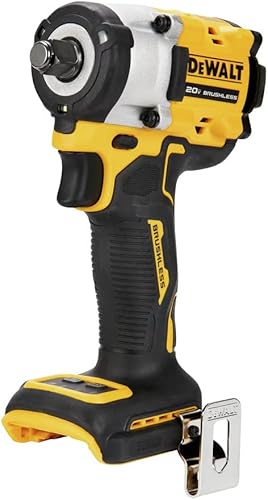 Best for wheel removal
DeWalt DCF921B 20V ATOMIC 1/2-inch Impact Wrench
Cordless ratchet vs impact wrench: what is the difference?
A cordless ratchet spins a socket through a ratcheting head, while an impact wrench delivers repeated rotational blows. That difference explains why one saves hand movements in tight spaces and the other helps loosen demanding fasteners.
A powered ratchet needs less handle swing than a manual ratchet while its motor turns the fastener. You still need room to place the head, seat the socket and hold the handle.
An impact wrench uses its hammering mechanism when resistance rises. It suits jobs that need loosening force, but that force can damage small fasteners or vulnerable parts.
Neither tool's maximum torque is a selectable final-tightening value. Treat torque figures as capability information, then follow the repair procedure for the actual joint.
Cordless ratchet or impact wrench for a first tool?
Buy the tool that removes the most repeated effort from your usual repairs. Start with a ratchet for crowded engine work, or an impact wrench if wheel removal and accessible, tight fasteners dominate your work.
Write down your last few jobs and identify the slow step. Repeated hand ratcheting points toward a powered ratchet; repeated struggles to loosen suitable fasteners point toward an impact wrench.
Our guide to what a cordless ratchet is used for covers common tasks. For occasional repairs, also consider whether cordless ratchets are worth it before adding another battery tool.
Which tool suits your regular repairs?
A ratchet suits repeated turns in confined areas; an impact wrench suits forceful loosening where access allows. Match the tool to the step in the repair rather than assigning one tool to an entire vehicle.
| Your usual task | Better starting choice | What to check |
|---|---|---|
| Removing several small engine-bay bolts | Cordless ratchet | Head clearance and room to withdraw |
| Removing wheel fasteners | Impact wrench | Required capability and vehicle procedure |
| Spinning a long, already-loosened bolt | Cordless ratchet | Thread condition and exit path |
| Loosening accessible, stubborn hardware | Impact wrench | Whether impact use is appropriate |
| Starting bolts in aluminum threads | Fingers first | Correct alignment and free engagement |
| Tightening a joint to a specification | Torque wrench | Required value and tightening sequence |
A ratchet can be the more frequent helper even when an impact wrench handles the hardest step. Once a bolt is loose, the remaining turns may take longer than breaking it free.
For a broader selection focused on vehicle access, see our cordless ratchets for car repair.
Who should buy the Milwaukee 2457-20?
Choose the Milwaukee for routine engine-bay fasteners when a low-profile head helps you reach the work. Skip it as your first purchase if your main goal is loosening wheel nuts or heavily seized hardware.
The 2457-20 has a 3/8-inch drive, up to 35 ft-lb of torque and a maximum speed of 250 RPM. Its variable-speed trigger lets you ease into movement instead of immediately running at full speed.
The recessed direction switch helps prevent accidental changes during work. A front LED lights the area, while the onboard fuel gauge helps you check charge before reaching into a crowded space.
This ratchet makes sense when you repeatedly remove covers, brackets and similar fasteners that suit its capability. Break tight bolts free with an appropriate tool first rather than expecting its motor to handle every removal.
Milwaukee's REDLINK system helps protect against overload and overheating. That protection isn't a reason to keep pulling the trigger against a stalled fastener.
Who should buy the DeWalt DCF921B?
Choose the DeWalt for accessible fasteners that need more loosening force. Skip it as your only powered socket tool if your usual repairs involve delicate hardware or spaces that won't accommodate its body.
The DCF921B uses a 1/2-inch drive. DeWalt specifies up to 300 ft-lb of fastening torque and 450 ft-lb of breakaway torque, giving it a different role from the Milwaukee ratchet.
Its 4 speed settings let you adjust operation to the task. Precision Wrench control helps prevent overtightening and fastener run-off, but it doesn't measure the final torque applied to a joint.
A hog ring anvil allows quick socket changes, and the onboard LED has brightness control. Those features help with setup and visibility, but socket fit and a clear approach still come first.
Don't assume this tool will remove every seized fastener. Corrosion, previous overtightening and damaged hardware can call for another removal method.
How should you compare torque figures?
Compare fastening torque with fastening torque, and keep breakaway torque separate. A loosening figure isn't a tightening target or a promise that every fastener below that number will come free.
The torque used when a bolt was installed doesn't tell the whole removal story. Rust, damaged threads and thread-locking compounds can change how hard it is to loosen later.
Drive size also doesn't define a tool's torque capability. It tells you which socket connection fits, so choose the drive and socket set together.
Read our guide to 3/8-inch vs 1/2-inch cordless ratchets if you're choosing sockets. For more on output figures, see how much torque a cordless ratchet has.
Avoid buying extra torque to solve an access problem. A stronger tool still can't turn a fastener if you can't seat the socket squarely.
How do you check whether the tool will fit?
Check the complete tool-and-socket setup, including the path out after loosening. A head that reaches the bolt isn't enough if the handle, battery or socket hits nearby parts.
Look at the fastener straight on where possible. Measure the gap around it and allow space for your hand to hold the tool without getting trapped against a bracket or panel.
Use the shortest suitable socket when depth is limited. A deep socket or extension can reach recessed hardware, but it also makes the setup longer and may introduce more movement.
Check what happens as the bolt backs out. A rising bolt can trap the socket and ratchet against nearby structure, so switch to a hand tool before clearance disappears.
Don't use the motor to force a partly seated socket onto a fastener. Correct the angle or change the setup first.
What else do you need before buying?
Budget for compatible batteries, charging and suitable sockets, because both tools here exclude a battery. A bare tool is useful only when you already have, or also obtain, its required power supply.
The Milwaukee uses M12 batteries, while the DeWalt belongs to the 20V MAX system. Don't assume that packs from different brands or voltage families will fit.
Check the charger as well as the battery. If you're starting from nothing, compare the full setup with cordless ratchet kits that include a battery and charger.
For impact work, use impact-rated sockets, extensions and adapters that fit securely. Choose the exact fastener size and inspect accessories before use.
An adapter can connect different drive sizes, but it adds length and another connection. Build around the sockets your regular jobs need instead of relying on adapters for every repair.
How should you set up and use each tool?
Start with sound sockets, aligned threads and a clear work area. Prepare the joint before squeezing the trigger, especially where a damaged thread would be difficult to repair.
- Secure the workpiece and wear eye protection. Use hearing protection for impact work, and follow the tool manual's precautions.
- Remove the battery before fitting accessories or inspecting the drive. Check that the socket is retained securely.
- Confirm direction before placing the socket on the fastener. Support the tool so it stays aligned.
- For removal, use an appropriate loosening method first if the ratchet cannot move the fastener. Stop when a socket slips or a fastener begins to deform.
- For installation, start threads by hand for several turns. Use gentle powered movement only after engagement feels correct.
- Finish specified joints with a calibrated torque wrench. Follow any required tightening sequence or angle procedure.
With a ratchet, leave room for handle reaction when resistance rises. Keep fingers away from places where the tool could press them against nearby parts.
With an impact wrench, use controlled trigger bursts and stop to assess progress. More time hammering isn't automatically the right answer when a fastener refuses to move.
What mistakes cause damage or wasted effort?
The biggest mistakes are forcing misaligned threads, using the wrong socket and treating motor output as final torque. Good technique matters with either tool, even when it has control features.
Driving a bolt that won't turn freely
Unexpected resistance early in installation can mean crossed threads, debris or the wrong bolt. Back it out and inspect the joint instead of powering through.
Clean or repair threads using the method appropriate to the part. Don't add oil, anti-seize or thread locker unless the repair instructions call for it, since thread condition affects tightening.
Holding a stalled ratchet on the trigger
A stalled motor signals that the task needs a different approach. Release the trigger and use a suitable loosening tool rather than repeatedly loading the motor.
Also check for a bolt that remains captured by another part. Force won't fix an overlooked retaining clip or a fastener that isn't meant to come out that way.
Relying on an impact setting for final tightening
A lower setting can reduce output, but it doesn't guarantee a precise torque value. Once a fastener has been overtightened, a torque wrench clicking afterward won't undo that excess load.
Leave final tightening to the specified tool and procedure. This matters particularly for wheels and other joints where clamping force is part of the repair requirement.
How do you care for a cordless ratchet or impact wrench?
Keep the drive, housing and battery contacts clean, and stop using damaged accessories. Simple checks before storage can prevent an avoidable problem during the next repair.
Remove the battery before cleaning or inspection. Wipe away dirt and grease with a method permitted by the manual, and avoid soaking the tool or pushing debris into openings.
Inspect sockets for cracks, rounded openings and worn retention points. Check the tool's drive for damage and make sure accessories stay attached securely.
Follow each manual's lubrication instructions rather than adding oil to openings. Store the tools and batteries dry, protected from loose metal objects and extreme temperatures.
If a tool becomes unusually hot or behaves differently, stop and let it cool before checking the cause. Don't keep restarting it against the same stuck fastener.
Do you need both tools or just one?
Buy both only when you regularly need both access and loosening force. For occasional maintenance, one powered tool plus suitable manual tools can cover your work without duplicating equipment.
A useful repair sequence is impact wrench or breaker bar for initial loosening, ratchet for repeated turns, then torque wrench for final installation. Each tool handles the part of the job it suits.
If a manual ratchet already reaches everything and repairs are rare, you may gain little from a powered ratchet. If stubborn fasteners are rare, an impact wrench may spend most of its time stored.
Choose from the work you actually repeat. Our complete cordless ratchet buying guide explains the features worth comparing once you've decided that a ratchet fills the gap.
Cordless ratchet vs impact wrench: which should you buy?
Pick the Milwaukee 2457-20 for repeated work in crowded engine bays. Pick the DeWalt DCF921B for accessible fasteners that need stronger loosening, including suitable wheel-removal jobs.
Before ordering, choose one repair you expect to do soon and confirm access, socket fit and battery compatibility. That check makes the cordless ratchet vs impact wrench decision more useful than comparing maximum output alone.
If routine spinning is your main need, use the cordless ratchet buying guide to narrow your choice by access and setup.
Frequently asked questions
Is a cordless ratchet the same as an impact wrench?
No, a cordless ratchet uses a motor to turn a ratcheting head, while an impact wrench adds repeated rotational blows. Choose the ratchet for access and repeated spinning; choose the impact wrench for demanding loosening where the repair procedure permits impact use.
Can a cordless ratchet remove lug nuts?
A cordless ratchet can spin lug nuts after they have been loosened, but it isn't the right first choice for breaking them free. Use an appropriate impact wrench or breaker bar for loosening, then follow the vehicle maker's procedure and finish installation with a torque wrench.
Which tool is better for working in an engine bay?
A cordless ratchet is usually the better starting point for crowded engine bays because its head can reach places that restrict an impact wrench. Check room for the socket, handle and battery too, and make sure the tool can back out as the fastener rises.
Does an impact wrench replace a cordless ratchet?
An impact wrench replaces a ratchet only where it fits and impact use suits the fastener; it won't cover every cramped or delicate repair. If your work includes wheel removal and crowded engine-bay jobs, the tools serve different steps and can justify separate places in your kit.
Should I tighten bolts with an impact wrench?
Use an impact wrench for tightening only where the repair procedure allows it, and start threads by hand first. Speed settings and control modes don't guarantee a precise final torque; for specified joints, stop before final tightening and use a calibrated torque wrench with the required sequence.


