9 Best Electric Torque Wrenches (November 2026)
The best electric torque wrenches include the GEARWRENCH 1/2-inch Electronic Torque Wrench for higher-torque auto repairs, the Craftsman 1/2-inch Digital Torque Wrench for garage wheel work, and the Uharbour 3/8-inch Digital Torque Wrench for light mechanical work.
On this page (7 sections)
- How we chose the best electric torque wrenches
- Which electric torque wrench fits your repair work?
- How to choose an electric torque wrench for your fasteners
- How to set up a digital torque wrench before tightening
- How to avoid common torque wrench mistakes
- How to care for an electronic torque wrench
- Which best electric torque wrench pick should you buy?
The GEARWRENCH 1/2-inch Electronic Torque Wrench is the best electric torque wrench here for higher-torque automotive work, provided your target falls within its stated accuracy band. For small fasteners, the Uharbour 3/8-inch model offers a more useful low starting point.
These tools measure torque as you pull the handle by hand. Batteries power the display and alerts, so buying an electronic wrench won't give you powered fastener turning.
For that job, read our complete cordless ratchet buying guide. Our guide to cordless ratchets and impact wrenches explains where each powered tool fits before final tightening.
Our picks at a glance
-
1
 Best for higher-torque auto repairs
GEARWRENCH 1/2-inch Electronic Torque Wrench
8.4/10 our score
See it on Amazon -
2
 Best for garage wheel work
Craftsman 1/2-inch Digital Torque Wrench
7.9/10 our score
See it on Amazon -
3
 Best for light mechanical work
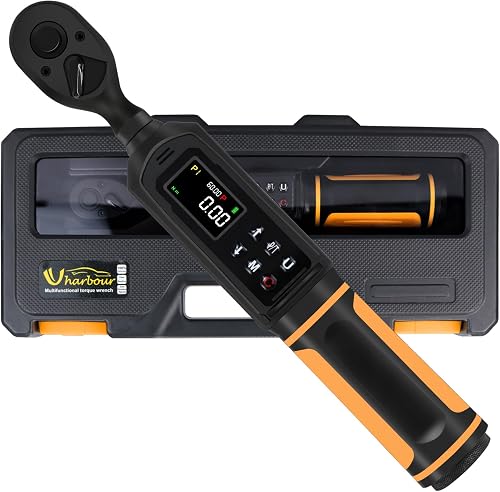
Uharbour 3/8-inch Digital Torque Wrench
7.4/10 our score
See it on Amazon
- 4
 Check it
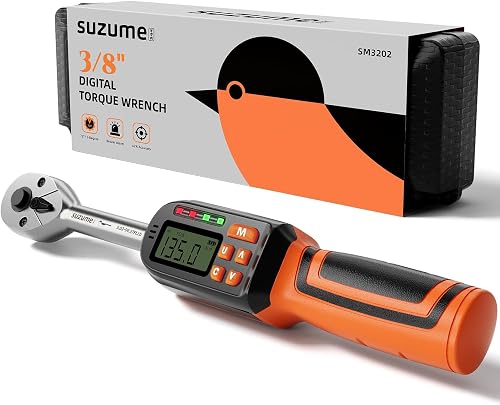
SUZUME 3/8-inch Digital Torque Wrench
Best for restricted handle movement - 5
 Check it
coobeast 3/8-inch Digital Torque Wrench
Best for repeated repair tasks - 6
 Check it
Uharbour 1/2-inch Digital Torque Wrench
Best for mixed garage jobs - 7
 Check it
SUERCUP 3/8-inch Digital Torque Wrench
Best for dim work areas - 8
 Check it
Hairich 3/8-inch Digital Torque Wrench
Best for reviewing past readings - 9
 Check it
INGJER 1/2-inch Electronic Torque Wrench
Best for exporting job records
How we chose the best electric torque wrenches
We prioritized usable torque ranges, clear accuracy conditions and target alerts, then compared access, controls and record keeping. A wrench earns its place by fitting a real repair task, rather than by having the longest feature list.
The order also reflects how confidently you can match each model to a fastener specification. Hairich and INGJER offer useful recording features, but conflicting range figures keep them below models with clear capacity figures.
Accuracy percentages need context: direction, working range and correct technique all matter. A smaller claimed percentage alone isn't enough to make one wrench the better buy.
| Product | Best for | Drive | Torque range | Alerts | Our score |
|---|---|---|---|---|---|
| GEARWRENCH 1/2-inch Electronic Torque Wrench | higher-torque auto repairs | 1/2 in | 30–340 Nm | Vibration, buzzer and LED | 8.4 |
| Craftsman 1/2-inch Digital Torque Wrench | garage wheel work | 1/2 in | 50–250 ft-lb | Click-style mechanism | 7.9 |
| Uharbour 3/8-inch Digital Torque Wrench | light mechanical work | 3/8 in | 0.9–60 Nm | Vibration, buzzer and LED | 7.4 |
| SUZUME 3/8-inch Digital Torque Wrench | restricted handle movement | 3/8 in | 6.8–135 Nm | Audible alarm and colored lights | 7.3 |
| coobeast 3/8-inch Digital Torque Wrench | repeated repair tasks | 3/8 in | 2–135 Nm | Vibration, buzzer and LED | 7.2 |
| Uharbour 1/2-inch Digital Torque Wrench | mixed garage jobs | 1/2 in | 3.8–250.8 ft-lb | Vibration, buzzer and LED | 7.0 |
| SUERCUP 3/8-inch Digital Torque Wrench | dim work areas | 3/8 in | 2–135 Nm | Vibration, buzzer and colored LEDs | 6.9 |
| Hairich 3/8-inch Digital Torque Wrench | reviewing past readings | 3/8 in | Conflicting ranges, confirm before buying | Buzzer and LED | 6.6 |
| INGJER 1/2-inch Electronic Torque Wrench | exporting job records | 1/2 in | Conflicting ranges, confirm before buying | Buzzer and LED indicators | 6.5 |
Which electric torque wrench fits your repair work?
Choose GEARWRENCH for higher-torque work, Uharbour's smaller model for low settings, or a preset-focused wrench for repeat jobs. Read the skip advice for each pick before choosing by score alone.
GEARWRENCH 1/2-inch Electronic Torque Wrench: Best for higher-torque auto repairs
- 30–340 Nm range
- ±2% CW and ±3% CCW accuracy from 20% to 100% of capacity
- Target torque alert with vibration, buzzer and LED
- 5 measurement units
Choose it for higher-torque automotive work when the required setting falls within its stated accuracy band. Several target cues help you follow the final pull.
Pros
- Clearly defined accuracy conditions
- Small ratchet swing arc
- Vibration, sound and light target cues
Cons
- Requires 2 AA batteries, not included
- Stated accuracy band starts above its minimum setting
GEARWRENCH: best electric torque wrench for higher-torque repairs
Choose the GEARWRENCH when you need a higher-capacity automotive wrench with clearly stated accuracy conditions. Its 30–340 Nm range covers many larger fastening tasks, though your equipment's required setting must guide the choice.
GEARWRENCH specifies ±2% clockwise and ±3% counterclockwise accuracy from 20% to 100% of capacity. That lower accuracy boundary is 68 Nm, so a selectable setting below it doesn't carry the same stated accuracy coverage.
The target warning helps you slow your pull before vibration, a buzzer and a solid LED signal completion. A 72-tooth ratchet needs a 5° return arc, useful when nearby parts restrict handle movement.
Skip this model as your only wrench if much of your work involves small fasteners. Add the 2 AA batteries it requires before your first job, and note that GEARWRENCH's 1-year limited warranty covers calibration accuracy for 90 days.
Craftsman 1/2-inch Digital Torque Wrench: Best for garage wheel work
- 1/2-inch drive
- 50–250 ft-lb range
- LED backlit screen
- Converts ft-lb, in-lb and Nm
Its higher starting point suits wheel fasteners whose required settings fit the range. A backlit screen and unit conversion simplify setup.
Pros
- Backlit display
- Button-operated unit conversion
- Clear storage case
Cons
- 50 ft-lb minimum excludes lighter fasteners
- Long handle needs clearance
Choose the Craftsman for wheel and larger-fastener work when the service torque falls within its 50–250 ft-lb range. Its higher minimum makes the intended role clearer than a broad claim about covering every garage task.
The backlit screen helps you check the setting in a dim workspace. Button-operated conversion among ft-lb, in-lb and Nm also reduces the need for a separate conversion step when switching between service instructions.
Craftsman describes a click-style mechanism and provides an ergonomic handle plus a clear case. Read the operating instructions so you know the completion cue before applying force to a critical fastener.
Skip it for small engine covers, light brackets or other parts whose required torque falls below its minimum. The 29.64-inch length also calls for a clear handle path, so measure access if you plan to work inside a crowded engine bay.
Uharbour 3/8-inch Digital Torque Wrench: Best for light mechanical work
- 0.9–60 Nm range
- Uharbour claims ±1% accuracy
- Peak and Track modes
- Vibration, buzzer and LED alerts
Its low starting point suits small fasteners that fall below the working ranges of larger wrenches. Check the manual's accuracy conditions for your exact setting.
Pros
- Lowest confirmed starting torque here
- Reversible ratchet head
- Calibration certificate included
Cons
- 60 Nm maximum limits heavier work
- Cannot replace a higher-capacity wrench
Choose the Uharbour 3/8-inch wrench for light mechanical work that needs a lower setting than the larger picks can cover. Its 0.9–60 Nm range has the lowest confirmed starting point in this group.
Uharbour claims ±1% accuracy, and a calibration certificate is included. Check the manual for the conditions attached to that claim, especially if your main reason for buying is work near the bottom of the range.
Peak mode supports a set target with vibration, sound and light alerts. Track mode shows torque as you pull, which helps you understand the difference between current force and a held maximum.
Skip it for any task above its ceiling, including wheel fasteners that require more torque. It makes more sense as a small-fastener tool or a companion to a larger wrench than as a single answer for every vehicle repair.
SUZUME 3/8-inch Digital Torque Wrench: Best for restricted handle movement
- 6.8–135 Nm range
- SUZUME claims ±2% accuracy
- 72-tooth ratchet with 5° swing
- Peak and Track modes
Choose it when nearby parts limit handle movement and your fastener fits its range. The short ratchet swing helps you reposition between pulls.
Pros
- Small swing arc
- Clockwise and counterclockwise accuracy claim
- Held or live torque readings
Cons
- 6.8 Nm minimum excludes lower settings
- Fine ratchet action does not solve head clearance
Choose the SUZUME when limited handle movement is the main obstacle to reaching the required setting. Its 72-tooth reversible ratchet needs a 5° swing, letting you reposition with a short return stroke.
The working range is 6.8–135 Nm, and SUZUME claims ±2% accuracy in both directions. This makes it worth considering for mixed mechanical work where the lowest settings of a smaller wrench aren't needed.
Peak mode holds the maximum reading after a pull, while Track mode shows the current torque. An audible alarm and colored lights give you cues as you approach and reach the target.
Skip it if the head or socket itself won't fit around the fastener, since a fine ratchet only helps with handle movement. Also choose a lower-range tool when the required setting falls below its minimum, rather than rounding the torque up to fit.
coobeast 3/8-inch Digital Torque Wrench: Best for repeated repair tasks
- 2–135 Nm range
- coobeast claims ±2% clockwise accuracy
- 9 preset values
- Stores up to 500 readings
Saved targets suit repeat work involving several known torque settings. Peak storage lets you review readings after each pull.
Pros
- 9 preset values
- Peak and Track modes
- Backlit color screen
Cons
- Counterclockwise accuracy needs confirmation
- 3.3 lb weight adds bulk
Choose the coobeast for repeat repair tasks with several torque settings. Its 9 presets let you return to saved targets, and storage for up to 500 readings helps you review completed pulls.
The range is 2–135 Nm, with a claimed ±2% clockwise accuracy. Its backlit color screen and vibration, buzzer and LED alerts provide several ways to follow progress without relying only on the changing number.
Presets are most useful when each slot has a clear purpose in your workflow. Keep a simple note of which setting belongs to which fastener, and verify the selected slot before each tightening stage.
Skip it if your work requires confirmed counterclockwise measurement and you haven't established that accuracy with coobeast. At 3.3 lb, it also deserves a closer look if you expect to hold the wrench overhead or work where supporting it is awkward.
Uharbour 1/2-inch Digital Torque Wrench: Best for mixed garage jobs
- 3.8–250.8 ft-lb range
- Uharbour claims ±1% accuracy
- Peak and Track modes
- Vibration, buzzer and LED alerts
Its broad stated range suits buyers with varied garage tasks and room for a larger wrench. Check low-end accuracy conditions before relying on it for delicate work.
Pros
- Broad stated torque range
- Reversible ratchet head
- Calibration certificate included
Cons
- Weighs 2.3 kg
- 51 cm length needs working space
Choose the Uharbour 1/2-inch wrench for varied garage work with room for a larger tool. Its stated 3.8–250.8 ft-lb range spans lower settings and higher-capacity tasks, while Uharbour claims ±1% accuracy.
That broad span makes the accuracy conditions in the manual especially relevant. Before choosing it as your only torque wrench, check that your lowest routine settings fall within the range covered by those conditions.
Peak and Track modes support target-guided pulls or live readings. Vibration, sound and light provide completion cues, and the reversible head allows operation in either direction.
Skip it if most of your work involves light fasteners in cramped spaces. The 51 cm length and 2.3 kg weight demand more room and support than a smaller tool, even when the torque setting itself fits the stated range.
SUERCUP 3/8-inch Digital Torque Wrench: Best for dim work areas
- 2–135 Nm range
- SUERCUP claims ±1% accuracy
- 9 preset modes
- Backlit color display
A backlit color screen and staged alerts help you follow a tightening pull in dim surroundings. Included accessories offer more socket connection options.
Pros
- 9 preset modes
- Stores up to 500 readings
- Includes batteries, extension and adapter
Cons
- Weighs 1.74 kg
- Drive adapter does not increase torque capacity
Choose the SUERCUP for dim work areas where several alert cues help. Its backlit color screen pairs with vibration, a buzzer and staged lights at 80%, 90% and 100% of the target.
The wrench covers 2–135 Nm, and SUERCUP claims ±1% accuracy. Nine presets and memory for up to 500 readings suit jobs where you move among known settings or want to review peak values afterward.
The set includes 2 AA batteries, a 125 mm extension and a 3/8-to-1/2-inch adapter. That makes it worth considering if those connections match your sockets and access needs.
Skip it if low weight is a priority, since it weighs 1.74 kg. The adapter changes socket compatibility, not the wrench's capacity, and its alerts still require you to stop pulling when the target is reached.
Hairich 3/8-inch Digital Torque Wrench: Best for reviewing past readings
- Hairich claims ±2% accuracy in both directions
- Track and Peak modes
- Stores up to 500 readings
- 5 measurement units
Peak memory suits buyers who want to review past pulls, but conflicting range figures prevent a firm recommendation until the exact model is confirmed.
Pros
- Accuracy claim covers both directions
- Early target warning
- Hairich provides a 36-month warranty
Cons
- Conflicting torque ranges need clarification
- Unsuitable for a firm capacity choice yet
Consider the Hairich for reviewing saved peak readings, but resolve its working range before buying. Hairich gives both 3–60 Nm and 6.75–135 Nm figures, which would suit different sets of fasteners.
Its memory holds up to 500 readings, with Track mode for live torque and Peak mode for captured maximum values. Hairich claims ±2% accuracy clockwise and counterclockwise and provides a 36-month warranty.
A buzzer and flashing light warn at 80% of the preset value. A steady light signals that the target has been reached or exceeded, so slowing down before that point matters.
Skip it for a time-sensitive repair unless Hairich confirms the exact model's minimum, maximum and accuracy conditions. Saved readings are useful, but they can't make up for uncertainty about whether the wrench suits the required torque.
INGJER 1/2-inch Electronic Torque Wrench: Best for exporting job records
- INGJER claims 2% accuracy
- Stores up to 500 readings with timestamps
- Peak Hold, Tracking and Preset modes
- USB export to Excel
Timestamped readings and USB export suit record keeping. Resolve its conflicting torque ranges before choosing it for a particular repair.
Pros
- Timestamped torque records
- USB export to Excel
- Storage box included
Cons
- Conflicting torque ranges need clarification
- Saved records still need fastener identification
Consider the INGJER when exporting torque records is part of the job. It stores up to 500 readings with timestamps and supports USB export to Excel, offering a clearer record-keeping role than basic peak memory.
INGJER claims 2% accuracy and offers Peak Hold, Tracking and Preset modes. The backlit screen and LED indicators help you follow the pull, and a storage box is included.
Its torque figures conflict across the stated ranges and units, so there isn't a firm working range to recommend here. Confirm the exact model's capacity and accuracy conditions before matching it to a repair.
Skip it if you simply need a clear, immediate choice for one known fastener setting. If you do need exported records, pair each reading with a fastener identifier, required target and job reference so the saved number has useful context.
How to choose an electric torque wrench for your fasteners
Start with the service torque and procedure, then choose a wrench that covers them within its accuracy conditions. Drive size, memory and display features come after that basic match.
Write down the settings you actually use
List the minimum and maximum torque values for your planned jobs, keeping the units beside each number. A small cover bolt and a wheel fastener can require very different tools even though both belong to the same vehicle.
Check for staged tightening, fastener replacement, thread preparation and a required tightening sequence. A torque figure without those instructions can lead to the wrong result.
If your routine jobs span a wide range, two wrenches may serve you better than one large model. Choose each around the work it will handle most often.
Read the accuracy band, not just the percentage
Accuracy applies under stated conditions, which can include direction and a limited part of the tool's capacity. GEARWRENCH illustrates why this matters: its selectable minimum is below the lower boundary of its stated accuracy band.
Also check whether a percentage refers to the reading or another reference defined in the manual. Don't rank two tools by their percentages until those conditions are clear.
A fine display increment is separate from measurement accuracy. More digits let you select or read smaller steps, but they don't prove that the measurement is closer to the true value.
Match the drive and handle to the space
Choose a drive that accepts your sockets, then check head clearance and the full path of the handle. For socket compatibility, our 3/8-inch vs 1/2-inch ratchet guide explains the common drive sizes.
A straight socket extension and an offset attachment affect the setup differently. Follow the wrench instructions for extensions, crowfoot attachments and any correction needed when an attachment changes effective length.
A flexible joint also makes it harder to keep the pull aligned. Plan a straight, controlled approach whenever the repair allows it.
Pay for memory only if you'll use it
Presets save setup time when you repeat known settings, while memory helps you review peak readings. For occasional repairs, clear controls and an obvious completion cue may matter more.
Stored torque isn't a full job record by itself. If documentation matters, record which fastener was tightened, the required target, the procedure and the tool used.
How to set up a digital torque wrench before tightening
Set the correct units, mode and target before applying force. A correct number in the wrong unit can cause a much larger error than small differences between accuracy claims.
- Read the repair procedure and identify the fastener's required torque, thread condition and tightening sequence.
- Install the specified batteries and check for a low-battery warning.
- Follow the manual's startup and zeroing steps with no force on the wrench.
- Select the required unit, target and operating mode, then read them back on the screen.
- Fit the correct socket fully and confirm the ratchet direction.
- Position the tool so you can grip the intended handle area and pull smoothly.
Start threaded fasteners by hand to reduce the risk of cross-threading. For routine fastener turning before final torque, our guide to what a cordless ratchet is used for explains where a powered tool helps.
Stop the run-down stage before final tightening so the torque wrench can perform the controlled finish. A powered tool can overshoot the target before you switch tools.
In Track mode, expect the current reading to fall as you release force. In Peak mode, follow the reset or save procedure before moving to the next fastener so you don't confuse an earlier maximum with the new pull.
How to avoid common torque wrench mistakes
Use a slow, steady pull and stop at the target cue. Digital alerts help you react, but none of these wrenches can prevent your hand from adding more force.
Don't jerk the handle or add extra leverage
Hold the intended grip area and apply force in the direction described by the manual. A sudden pull or an added pipe makes control harder and can overload the tool.
Don't brace against the display housing or head in a way that adds force outside the intended grip. Reposition yourself so the final pull stays smooth.
Don't repeat the pull just to hear another alert
Reapplying force until the signal appears again can turn the fastener farther. Complete the specified sequence and verification steps instead of chasing repeated completion cues.
A peak reading records the torque reached during that pull. It doesn't directly measure clamping force or reveal the original installation torque of an already-tight fastener.
Don't change thread conditions without instructions
Use the thread condition specified by the equipment manufacturer. Oil, anti-seize, debris and damaged threads can change the relationship between applied torque and fastener tension.
Clean or replace parts as the procedure requires. Don't add lubricant simply because a fastener feels difficult to turn.
Don't confuse torque with angle
A torque-plus-angle procedure requires both parts of the instruction. A target-torque alert alone doesn't perform the angle step, so use the required angle method or tool.
Likewise, a reversible head doesn't turn a measuring wrench into a breaker bar. Our cordless ratchet vs impact wrench comparison covers the removal tools to consider before controlled reassembly.
How to care for an electronic torque wrench
Protect the sensor, ratchet and electronics by keeping the wrench clean, dry and free from shock loads. Store it securely rather than leaving it loose among heavy sockets.
Wipe off residue using the cleaning method allowed in the manual. Oil-resistant housing doesn't mean you should soak the tool or spray cleaner into the display, buttons or battery compartment.
Follow the model's battery-storage instructions, especially during long periods without use. Remove leaking batteries promptly and address corrosion before using the tool again.
Keep calibration documents with the wrench and follow its service or calibration schedule. A drop, overload or unexpected reading is a reason to arrange a calibration check before another torque-critical job.
Storage instructions vary by wrench design. Follow the electronic model's manual rather than assuming it needs the same setting adjustment as a mechanical click wrench.
Which best electric torque wrench pick should you buy?
Choose GEARWRENCH for higher-torque automotive work, provided the required settings sit within its stated accuracy band. Choose Craftsman for wheel and larger-fastener jobs that fit its higher starting point.
For light mechanical work, start with the Uharbour 3/8-inch model. Compare SUZUME when handle movement is restricted, coobeast for repeat settings, or SUERCUP when a bright display and several alert cues matter most.
The larger Uharbour suits mixed garage tasks if you have room for its handle and weight. Keep Hairich and INGJER as conditional choices until their exact working ranges are confirmed.
The best electric torque wrench is the one that matches your fasteners, fits the space and gives you a clear cue to stop. Write down your required settings before choosing, then follow the repair procedure at the bench.
If powered fastener turning is your next need, our guide to the best cordless ratchets will help you choose a companion tool.
Our top 3 picks at a glance
-
1
Best for higher-torque auto repairs
GEARWRENCH 1/2-inch Electronic Torque Wrench
8.4/10 our score
See it on Amazon -
2
Best for garage wheel work
Craftsman 1/2-inch Digital Torque Wrench
7.9/10 our score
See it on Amazon -
3
Best for light mechanical work
Uharbour 3/8-inch Digital Torque Wrench
7.4/10 our score
See it on Amazon
Frequently asked questions
What is the best electric torque wrench?
The GEARWRENCH 1/2-inch Electronic Torque Wrench is our top pick for higher-torque automotive work because it combines several target alerts with clear accuracy conditions; for lighter fasteners, choose a lower-range model instead. The right wrench must cover your required setting within the accuracy band stated in its manual.
Is a digital torque wrench the same as an electric torque wrench?
For the tools in this guide, digital and electronic refer to the torque display and related functions; you turn the fastener by hand, while batteries power the electronics. A powered impact wrench or cordless ratchet turns fasteners for you, so it serves a different role in the repair process.
Should I choose a 3/8-inch or 1/2-inch torque wrench?
Choose the torque range first, then match the drive to your sockets and available space; several 1/2-inch models here cover higher settings, but a drive size does not define capacity or accuracy. Our ratchet drive size guide explains socket compatibility and the practical differences between common drives.
Can I use an electric torque wrench to loosen bolts?
Use a separate removal tool for stuck fasteners, and use a torque wrench for loosening only when its manual permits it; a reversible head does not confirm that it can handle breakaway loads. Our cordless ratchet vs impact wrench guide explains which powered tool suits removal and routine fastener turning.
Do digital torque wrench alerts prevent overtightening?
No, target alerts tell you when to stop, but they do not stop your hand from adding force. Slow down as you approach the target and release force when the completion signal appears; a quick jerk can carry the fastener past its setting before you react to the warning.


