Milwaukee 2567-20 vs 2457-20: Which Ratchet to Buy? (November 2026)
The Milwaukee 2567-20 wins for most buyers: its High Speed 3/8 in. head gives you 450 RPM and the same 35 ft-lb rating as the 2457-20. Pick the 2457-20 only if its low-profile head is the reach you actually need in tight engine bays.
On this page (9 sections)
- Milwaukee 2567-20 vs 2457-20: the quick answer
- The two ratchets side by side
- Speed decides most jobs: why the 2567-20 wins overall
- Head reach decides the tight jobs: why the 2457-20 still has a place
- Which ratchet suits your bay?
- Batteries, sockets and what you'll need to buy
- Torque, speed and the work you actually do
- Who should buy which?
- Our verdict on the Milwaukee 2567-20 vs 2457-20
The Milwaukee 2567-20 wins for most buyers: its High Speed head gives you 450 RPM and the same 35 ft-lb rating as the 2457-20. If reach is the whole job, the 2457-20's low-profile head is the better fit.
The Milwaukee 2567-20 vs 2457-20 question is really about how you work. One ratchet trades speed for head clearance, and the other does the opposite.
Both are M12 bare tools with a 3/8 in. drive. Neither includes a battery, so the comparison starts at the tool and works outward.
 Best for most buyers
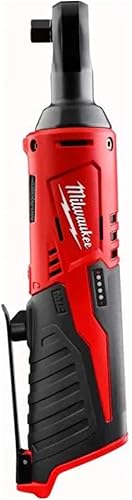
Milwaukee M12 12-Volt Lithium-Ion Brushless Cordless High
Milwaukee 2567-20 vs 2457-20: the quick answer
Buy the 2567-20 unless head clearance is your bottleneck. Its 450 RPM spins long bolts fast, and 35 ft-lb is enough to break most engine bay fasteners loose.
The 2457-20 is the reach tool. Its low-profile head is designed to work in an engine bay where the high-speed body can't fit.
So the split is simple. Choose speed for routine jobs and reach for the fasteners nothing else can touch.
Our full M12 ratchet comparison covers the rest of the Milwaukee lineup if you want the wider picture before you commit.
The two ratchets side by side
Both use a 3/8 in. drive and carry a 35 ft-lb max torque rating, so the table separates them on speed, weight and head design. That's where your money actually goes.
| Feature | Milwaukee 2567-20 | Milwaukee 2457-20 |
|---|---|---|
| Drive size | 3/8 in. | 3/8 in. |
| Max torque | 35 ft-lb | 35 ft-lb |
| Speed | 450 RPM | 250 RPM |
| Weight | 1.8 lb | 16 oz |
| Head | Standard compact head | Low-profile head |
| Power | M12 battery (sold separately) | M12 battery (sold separately) |
The 2567-20's speed advantage is the biggest gap. At 450 RPM it runs bolts in and out nearly twice as fast as the 250 RPM 2457-20.
Weight goes the other way. The 2457-20 weighs 16 oz, about a pound lighter than the 1.8 lb 2567-20.
That difference matters when you're holding the tool overhead or reaching deep into a wheel well. A lighter body tires your wrist more slowly.
| Product | Best for | Drive size | Max torque | Speed | Our score |
|---|---|---|---|---|---|
| Milwaukee M12 12-Volt Lithium-Ion Brushless Cordless High | most buyers | 3/8 in. | 35 ft-lb | 450 RPM | 9.4 |
| Milwaukee 2457-20 M12 3/8-inch Ratchet | tight engine bays | 3/8 in. | 35 ft-lb | 250 RPM | 9.1 |
Speed decides most jobs: why the 2567-20 wins overall
The 2567-20 wins for most buyers because 450 RPM cuts time on the fasteners you touch every day. That's the deciding point in this Milwaukee 2567-20 vs 2457-20 matchup.
Think about the ordinary work a cordless ratchet handles. You run down long bolts on valve covers, remove a row of undercarriage fasteners or spin lug nuts back on before final torque.
At 450 RPM the 2567-20 does that running quickly. The 250 RPM 2457-20 does the same job, just slower, and you feel the difference across a long day.
Milwaukee also calls the 2567-20's 450 RPM "best-in-class productivity" and points to pneumatic ratchet performance. That's a maker claim, but the speed figure itself is in the spec.
The torque ratings match. Both tools list 35 ft-lb max torque, so the 2567-20 doesn't give up breaking power to gain speed.
That's the core reason the 2567-20 earns the higher score. You keep the same torque and gain speed, so the only thing you lose is head reach.
What 450 RPM means in practice
A faster ratchet means fewer trigger pulls and less time under the hood. If you remove a dozen fasteners, the difference in trigger time adds up.
The 2567-20's 450 RPM is close to twice the 2457-20's 250 RPM. A long bolt that takes seconds on the high-speed tool takes longer on the low-profile one.
This matters most in flat-rate or production work, where time per job matters. It matters less for a weekend project where you're not counting minutes.
Where the speed advantage stops
Speed doesn't help when the head won't fit, and that's the 2567-20's weak point. A fast ratchet that can't reach the fastener does nothing for you.
If your engine bay has the clearance for a compact head, the 2567-20 is the better everyday tool. If not, speed stops being relevant.
Head reach decides the tight jobs: why the 2457-20 still has a place
The 2457-20 wins when head clearance is the limit, because its low-profile design reaches fasteners a compact head can't. Reach is the one thing speed can't buy.
Milwaukee designed the 2457-20's head to sit lower and reach into engine bays without issue. The recessed forward and backward switch sits on the back of the head to avoid accidental actuation.
That matters when you're working around suspension, exhaust manifolds or accessories packed tight against the block. A taller head simply won't slide in.
The 2457-20 also brings a 3/4 in. low-profile head design and a variable-speed metal trigger. It's rated at 35 ft-lb and 250 RPM.
Its LED light sits on the front of the unit and helps you see in dimly lit spots. The onboard fuel gauge tells you how much charge the M12 battery has left.
If you work on older cars or cramped engine bays, this is the ratchet you reach for. Our Milwaukee 2457-20 review covers that head design in detail.
Reach you can feel under the hood
Head height is the spec that decides whether a ratchet gets onto a bolt at all. Torque and speed only count once the socket is seated.
The 2457-20's low-profile head is meant for exactly this. It works in an engine bay where a bulkier ratchet stops at the first obstruction.
That's the case for keeping a reach ratchet even when you own a faster one. The two tools cover different fasteners.
The lighter body helps overhead
At 16 oz, the 2457-20 is the lighter of the two, and that helps when your arms are up. The 2567-20 weighs 1.8 lb.
Holding a tool above your head or reaching into a wheel well gets old fast. A body about a pound lighter reduces the load on your wrist over a long session.
The 2457-20's small size and light weight are why it stays in the box as a second ratchet. It's the one you grab when the job is awkward, not just tight.
Which ratchet suits your bay?
Pick the 2567-20 if your engine bay has clearance for a compact head; keep the 2457-20 for the fasteners that need a low-profile reach. Your bay decides more than your budget does.
If you work on modern vehicles with open engine bays, the 2567-20's speed saves time on almost every job. You'll rarely need the extra reach.
If you work on older cars or packed engine bays, the 2457-20's low-profile head earns its place. It gets onto fasteners the 2567-20 can't.
If you buy only one ratchet and you don't know your bay, the 2567-20 is the safer default. It's the faster tool and the one most buyers will reach for first.
When a single ratchet is enough
One ratchet covers most buyers, and for a first M12 ratchet the 2567-20 is the better one to buy. It's the faster of the two and the more versatile everyday tool.
If you're setting up a first cordless ratchet kit, start with the 2567-20. You get the speed and the torque, and you can add a reach tool later if a job demands it.
When to buy both
Buy both if you work on a mix of engine bays, because the tools cover each other's weak spots. That's the usual pattern for techs who work on many vehicles.
The 2567-20 handles routine speed work. The 2457-20 handles the fasteners where head clearance is the limit.
Both run on the same M12 batteries. One battery platform covers both tools, so the second ratchet costs you the tool only.
If you're also considering DeWalt's option, our DeWalt vs Milwaukee cordless ratchet comparison weighs the two brands directly.
Batteries, sockets and what you'll need to buy
Both ratchets are bare tools, so you need an M12 battery and charger before either one runs. Budget for that, or use an M12 kit you already own.
The 2567-20 and 2457-20 both take Milwaukee's M12 12-volt batteries. A battery from another M12 tool works in either ratchet.
Sockets are the same for both, because both use a 3/8 in. drive. You won't buy a separate socket set for each.
The 2457-20 uses REDLINK Intelligence, a chip that talks to the M12 battery to prevent overheating and damage. The 2567-20's compact design is meant for access in tight spaces.
Plan your kit around your existing batteries. If you already run M12 tools, either ratchet slots in without a new charger.
Torque, speed and the work you actually do
Both tools carry 35 ft-lb max torque, so neither one out-turns the other; the difference is how fast you get there. Speed is the practical gap between them.
Thirty-five foot-pounds is enough for most engine bay and undercarriage fasteners. Final torque on critical bolts still needs a torque wrench, as it does with any ratchet.
The 2567-20's 450 RPM gets you to that torque quickly. The 2457-20's 250 RPM does the same with more trigger time.
If you mostly loosen and run down fasteners, the speed matters. If you mostly need to get onto awkward bolts, the head design matters more.
Torque and the high-speed head
The 2567-20 pairs its speed with a pneumatic-style 35 ft-lb rating, so it's not a slow-speed compromise. Milwaukee calls it pneumatic ratchet performance, a maker claim, but the torque spec is plain.
That combination is why it's the better all-rounder. You get speed without giving up the breaking power the job needs.
Torque and the reach head
The 2457-20 keeps the same 35 ft-lb while shrinking its head. You don't lose torque to gain reach, which is why it stays useful.
The trade is speed. You give up RPM for clearance, and that's the right trade when the bolt is otherwise out of reach.
Who should buy which?
Buy the 2567-20 for everyday speed and the 2457-20 for reach into tight engine bays. Most readers should start with the 2567-20.
Choose the 2567-20 if you're a home mechanic doing routine maintenance. The 450 RPM and 35 ft-lb cover brakes, undercarriage work and engine bay bolts without slowing you down.
Choose the 2457-20 if cramped engine bays are your normal working environment. Its low-profile head gets onto fasteners where a compact body won't slide in.
Skip the 2457-20 as your only ratchet if you mostly do open work. You'd be paying in speed for reach you rarely use.
Our other Milwaukee ratchet comparison covers the larger M12 options if you want more from the platform.
Our verdict on the Milwaukee 2567-20 vs 2457-20
For most buyers, the Milwaukee 2567-20 is the ratchet to buy. The 450 RPM speed and 35 ft-lb rating make it the stronger everyday tool, and it carries the higher score in this comparison.
The 2457-20 is the specialist. Buy it when head clearance is the limit and a faster ratchet simply won't reach.
If you work on one kind of vehicle and know your bay, choose accordingly. For everyone else, start with the 2567-20 and add the reach ratchet when a job proves you need it.
That's the answer to the Milwaukee 2567-20 vs 2457-20 question: speed for most, reach for the tight spots. Both run on the same M12 batteries, so the second tool costs less than switching platforms.
Frequently asked questions
Is the Milwaukee 2557-20 the same as the 2567-20?
No. The 2567-20 is Milwaukee's M12 High Speed ratchet, with a 3/8 in. drive, 450 RPM and up to 35 ft-lb max torque.
The 2457-20 is the low-profile 3/8 in. ratchet, and its recessed head reaches fasteners in tighter spots than the high-speed body.
What torque does the 2567-20 have?
Milwaukee rates the 2567-20 at up to 35 ft-lb max torque, which is enough for most engine bay and undercarriage fasteners. Both ratchets in this comparison carry the same 35 ft-lb rating, so speed and head reach separate them more than torque does.
Do these Milwaukee ratchets include a battery?
Neither the 2567-20 nor the 2457-20 comes with a battery; both are sold as bare tools. You'll need an M12 battery and charger, or an existing M12 kit, before either ratchet will run.
Which ratchet is better for brake caliper bolts?
The 2567-20 suits brake work well because 450 RPM spins caliper bolts out quickly, and 35 ft-lb is enough to break most of them loose. Use the 2457-20 when the caliper sits close to suspension parts and head clearance is the limit.
Is the 2567-20 worth it over the older M12 ratchet?
The 2567-20 is the faster pick, with 450 RPM against 250 RPM on the 2457-20. If you already own the older ratchet and it reaches your fasteners, the speed gain alone rarely justifies a second tool.
What drive size do these Milwaukee M12 ratchets use?
Both models here use a 3/8 in. drive, so they take the same sockets. That means the choice comes down to speed and head reach, not socket sets or accessories.


