9 Best Milwaukee Cordless Ratchets (November 2026)
The best Milwaukee cordless ratchets compared by size and features include the Milwaukee 2457-20 M12 3/8-inch Ratchet for most buyers, the DeWalt DCF513B 20V ATOMIC 3/8-inch Ratchet for high-torque jobs, and the DeWalt DCF510B 20V XR 3/8 and 1/2-inch Ratchet for two drive sizes.
On this page (9 sections)
- The best Milwaukee cordless ratchets for each job
- How these Milwaukee cordless ratchets compare
- How we compared these ratchets
- Which drive size should you choose?
- Bare tool or kit: which should you buy?
- M12 or 18V for a Milwaukee garage?
- How much torque does a cordless ratchet actually need?
- Does the low-profile head really matter?
- The verdict on the best Milwaukee cordless ratchets
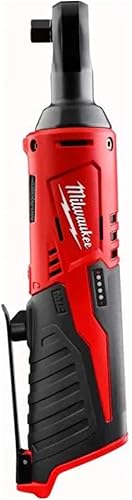
The best Milwaukee cordless ratchet for most buyers is the Milwaukee 2457-20 M12 3/8-inch Ratchet, a 35 ft-lbs, 250 RPM tool with a low-profile head that slips into engine bays and tight assembly spots. Pick the M12 FUEL 1/4-inch ratchet for 450 RPM on small fasteners, or the 2457-21 kit if you have no M12 batteries yet.
Milwaukee's ratchet line is smaller than it looks: two drive sizes, brushed and FUEL motors, and bare-tool or kit versions of the same body. The decision mostly comes down to the drive size you reach for most and how fast you want the tool to spin.
Our picks at a glance
-
1
-
2
 Best for high-torque jobs
DeWalt DCF513B 20V ATOMIC 3/8-inch Ratchet
8.8/10 our score
See it on Amazon -
3
 Best for two drive sizes
DeWalt DCF510B 20V XR 3/8 and 1/2-inch Ratchet
8.6/10 our score
See it on Amazon
- 4
 Check it
ADOTOCAM 3/8" Cordless Ratchet Wrench for Milwaukee
Best for long reach - 5
 Check it
Milwaukee 2457-21 M12 3/8-inch Ratchet Kit
Best for a first M12 tool - 6
 Check it
Milwaukee M12 FUEL 3/8-inch High Speed Ratchet Kit
Best for speed on assembly work - 7
 Check it
ACROPOW 3/8" Cordless Ratchet Wrench for Milwaukee
Best for budget 18V owners - 8
 Check it
Milwaukee 2566-20 M12 FUEL 1/4-inch Ratchet
Best for small fasteners - 9
 Check it
AOBEN 12V 3/8-inch Ratchet Kit
Best for a complete starter kit
The best Milwaukee cordless ratchets for each job
The 2457-20 wins on balance of price, size and everyday usability. Every other pick here earns its place by solving a narrower problem: more speed, a smaller drive, a bigger battery platform, or a complete kit in one box.
Milwaukee 2457-20 M12 3/8-inch Ratchet: Best for most buyers
- 35 ft-lbs of torque
- 250 RPM
- Low-profile head
- Variable-speed metal trigger
- LED light and onboard fuel gauge
The everyday M12 ratchet: enough torque for engine bay fasteners in a head that fits where a full-size tool won't.
Pros
- Low-profile head for engine bays
- Recessed forward and reverse switch
- Onboard fuel gauge
Cons
- Battery and charger sold separately
- Less torque than the DeWALT picks here
The 2457-20 is the ratchet most people should buy first. Its 12-volt motor produces 35 ft-lbs of torque and 250 RPM, which is enough to run down and remove the fasteners you meet in engine bays, under dashboards and on light assembly work.
The tool body measures 9.47 inches and weighs 16 ounces, so it hangs off a belt without dragging your trousers down.
What makes it easy to live with is the head. The low-profile design and a forward/reverse switch recessed into the back of the head mean you can work in a tight spot without knocking the direction lever by accident.
An LED light on the front covers dim areas, and the onboard fuel gauge on the side tells you how much charge is left before you crawl under a car. The variable-speed metal trigger lets you ease onto a fastener rather than slam it.
REDLINK intelligence sits between the tool and the M12 battery to manage power draw and heat. The trade-off is torque: at 35 ft-lbs it sits well below the DeWALT 20V tools here, so it's a speed and access tool rather than a breaker bar replacement.
It's also a bare tool, so budget for an M12 battery. Read our full Milwaukee 2457-20 review for more.
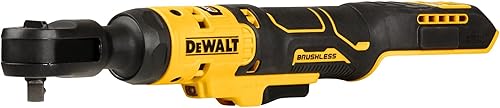
DeWalt DCF513B 20V ATOMIC 3/8-inch Ratchet: Best for high-torque jobs
- Brushless motor
- 70 ft-lbs of torque
- Glass-filled nylon housing
- LED work light
- Trigger lock
Double the torque of the M12 for stubborn fasteners, in a 20V platform body that needs its own batteries.
Pros
- 70 ft-lbs for tough bolts
- Housing resists oils and solvents
- Trigger lock for storage
Cons
- Needs DeWALT 20V batteries
- Bulkier than the M12
When a fastener is properly stuck, torque is what gets it moving. The DeWALT DCF513B delivers 70 ft-lbs from a brushless motor, twice what the M12 2457-20 offers, in a compact body with a low-profile head.
The glass-filled nylon housing is there for a reason: engine bays are full of oils and solvents, and that material shrugs off splashes that would dull a plainer shell.
An onboard LED lights the work area, and the variable-speed trigger lets you creep up on a tight bolt instead of hitting it at full speed. A trigger lock keeps the tool from firing in a toolbox.
The tool weighs 2.6 pounds and measures 15.79 inches overall.
The catch is the battery platform. This is a DeWALT 20V MAX tool, so it only makes sense if you already own those packs.
The body is heavier than the M12 and its extra length means less wiggle room in the tightest spots. Buy it for stubborn fasteners and a DeWALT battery drawer; skip it if you're starting from scratch in Milwaukee.
DeWalt DCF510B 20V XR 3/8 and 1/2-inch Ratchet: Best for two drive sizes
- Interchangeable 3/8 and 1/2 in anvils
- Brushless motor
- 75 ft-lbs of torque
- 0-300 RPM
- Sealed head
One body that swaps between 3/8 and 1/2 inch drives, with the most torque in this group.
Pros
- Swap between two drive sizes
- 75 ft-lbs of torque
- Sealed head design
Cons
- Heaviest pick here
- Battery and charger sold separately
Some jobs call for 3/8 inch sockets and others for 1/2 inch, and the DCF510B covers both. Its interchangeable anvil design lets you swap between a 3/8 inch and a 1/2 inch square drive without reaching for a second tool, and both anvils come in the box.
The brushless motor turns out 75 ft-lbs of max torque at 0-300 RPM, the highest torque figure in this roundup. A sealed head and glass-filled nylon housing are built to shrug off automotive fluids.
The forward/reverse switch and trigger lock work the way you'd expect. The kit includes the ratchet plus the 3/8 and 1/2 inch square drive anvils, so there's no separate adapter to misplace.
The trade-off is weight. At 3.1 pounds this is the heaviest tool here, and its 1.25 foot length makes it the least nimble in a cramped engine bay.
It's also a bare tool on the DeWALT 20V platform. Buy it if you work on a mix of fastener sizes and want one body to cover both; if you mostly turn 3/8 inch hardware in tight spots, the smaller M12 will feel easier in the hand.
ADOTOCAM 3/8" Cordless Ratchet Wrench for Milwaukee: Best for long reach
- Compatible with Milwaukee 18V batteries
- Brushless motor
- 75 ft-lbs of torque
- 5.5 in extended neck
- Forward and reverse switch
A long-neck 18V ratchet for deep fasteners, using the Milwaukee batteries you already own.
Pros
- 5.5 in extended neck
- Works with Milwaukee 18V batteries
- Three adapters and an extension bar included
Cons
- Not made by Milwaukee
- Tool only, no battery
Deep-set fasteners are where the ADOTOCAM earns its keep. A 5.5 inch extended neck reaches into places a standard ratchet can't, like behind an engine block or under a dashboard, and the low-profile 3/8 inch head keeps the working end slim.
The round head style is compact enough for confined spots that swallow a longer body.
It runs a brushless motor at 75 ft-lbs and 0-250 RPM, with a variable-speed trigger and a forward/reverse switch. The aluminium alloy housing resists impact and fluids, and a safety lock stops accidental starts in storage.
The kit includes 3/8 to 1/2 and 3/8 to 1/4 adapters plus a 3 inch extension bar, which covers the socket sizes most people own.
The key point is the battery: this is a third-party tool built to run on Milwaukee 18V batteries, and it is not made by Milwaukee. If your garage is already full of M18 packs, that's a cheap way to add a long-reach ratchet.
If you're buying into M12, the 2457-20 stays the simpler choice.
Milwaukee 2457-21 M12 3/8-inch Ratchet Kit: Best for a first M12 tool
- 35 ft-lbs of torque
- 250 RPM
- M12 battery and 30-minute charger included
- Carrying case
- Onboard fuel gauge
The 2457-20 in a kit with the battery, charger and case, so you can use it the day it arrives.
Pros
- Battery and charger in the box
- Carrying case included
- Same 35 ft-lbs and 250 RPM as the bare tool
Cons
- Higher outlay than the tool alone
- Same torque ceiling as the 2457-20
The 2457-21 is the same ratchet as the 2457-20, sold as a kit. You get the tool plus an M12 Red Lithium battery, a 30-minute charger and a carrying case, so there's nothing else to buy before your first job.
The specs match the bare tool: 35 ft-lbs, 250 RPM, a variable-speed trigger, an onboard fuel gauge and a built-in LED. The tool weighs 1.9 pounds and runs 10.1 inches long.
The reinforced metal housing and trigger are there for long tool life. The kit makes sense for anyone who doesn't already own M12 batteries and wants one purchase that works out of the box.
The trade-off against the 2457-20 is the extra outlay for the battery and charger. If you already run M12 tools, the bare tool is the better buy.
If this is your entry into the M12 line, the kit saves you a second order and gives you a case to keep it in. It also spares you the guesswork of matching a battery to the tool.
Milwaukee M12 FUEL 3/8-inch High Speed Ratchet Kit: Best for speed on assembly work
- M12 FUEL brushless motor
- High speed gearing
- Kit with two batteries, charger and case
- 35 ft-lbs of torque
The FUEL version of the 3/8 inch M12, sold as a kit for buyers who want faster run-downs.
Pros
- Brushless FUEL motor
- Two batteries in the kit
- Carrying case included
Cons
- More expensive than the brushed kit
- Same 35 ft-lbs as the standard M12
The M12 FUEL 3/8-inch High Speed Ratchet Kit takes the same drive size as the 2457-21 and adds a brushless FUEL motor plus high-speed gearing. It ships as a kit with two batteries, a charger and a case, so one pack can charge while the other runs.
The speed advantage matters on repetitive work: running down a row of bolts on an assembly or a valve cover goes faster with the FUEL gearing than with the brushed motor. Torque stays at 35 ft-lbs, so it isn't a step up in pulling power, only in pace.
The kit packs three items, which means fewer trips back to the charger on a long job.
The trade-off is cost and complexity. It's more expensive than the brushed kit, and for occasional weekend jobs the extra speed won't earn back the difference.
Buy it if you use a ratchet most days and want the faster spin; read our M12 ratchet vs M12 FUEL ratchet breakdown if you're weighing the two.
ACROPOW 3/8" Cordless Ratchet Wrench for Milwaukee: Best for budget 18V owners
- Compatible with Milwaukee 18V batteries
- Brushless motor
- 74 ft-lbs of torque
- 0-250 RPM
- Safety trigger lock
A low-cost 18V body that runs on Milwaukee batteries, with torque close to the DeWALT 20V picks.
Pros
- 74 ft-lbs of torque
- Aluminium alloy housing
- Rubberized grip
Cons
- Not made by Milwaukee
- Tool only, no battery or charger
The ACROPOW is another 18V body built for Milwaukee batteries, and it lands close to the DeWALT tools on paper: 74 ft-lbs of torque and 0-250 RPM from a brushless motor. The aluminium alloy housing resists oils and solvents, and the rubberized grip cuts vibration during long jobs.
An onboard LED lights dim spaces, and the compact low-profile head helps in tight locations. A variable forward/reverse switch and a safety trigger lock round out the controls.
The kit includes 3/8 to 1/2 and 3/8 to 1/4 adapters and a 3 inch extension bar. The 3/8 inch jaw capacity matches the Milwaukee tools, so the same sockets fit.
Two things set it apart from the Milwaukee-branded picks. It's a third-party tool, not manufactured by Milwaukee, and it runs on M18 batteries rather than M12.
That makes it a budget way to add torque if you already own Milwaukee 18V packs. If you want the M12 form factor or brand support, stay with the 2457-20.
Milwaukee 2566-20 M12 FUEL 1/4-inch Ratchet: Best for small fasteners
- Brushless FUEL motor
- 450 RPM
- 1/4 in drive
- Compact 1.8 lb body
- REDLINK PLUS intelligence
The fastest Milwaukee ratchet here, sized for small fasteners and trim work rather than big bolts.
Pros
- 450 RPM for quick run-downs
- Light at 1.8 lb
- 40 ft-lbs of torque
Cons
- 1/4 in drive only
- Battery and charger sold separately
Small fasteners need speed more than torque, and the 2566-20 delivers. Its brushless FUEL motor spins at 450 RPM, the fastest in this group, with 40 ft-lbs of torque in a 1/4 inch drive body that weighs 1.8 pounds.
The compact head has a 0.75 inch profile for confined areas, and REDLINK PLUS intelligence guards against overloading and overheating. A variable-speed trigger gives you control on delicate work.
It's a bare tool, so an M12 battery and charger are extra.
The 1/4 inch drive is the limitation. It's ideal for trim, interior panels and small engine fasteners, but it won't take the 3/8 inch sockets most people reach for on suspension and drivetrain bolts.
The 40 ft-lbs figure actually edges the standard M12's 35 ft-lbs, which shows how much this tool is tuned for small hardware at speed. Buy it as a second ratchet alongside a 3/8 inch tool, not as your only one.
AOBEN 12V 3/8-inch Ratchet Kit: Best for a complete starter kit
- 12V motor
- 40 ft-lbs of torque
- 280 RPM
- Two 2000mAh batteries and charger
- Six sockets and case
A non-Milwaukee kit with batteries, sockets and a case, for buyers who want everything in one box.
Pros
- Two batteries and charger included
- Six sockets and extension bar
- Carrying case
Cons
- Not made by Milwaukee
- Lowest score here
The AOBEN kit is the one pick here that isn't built around Milwaukee batteries. It's a 12V tool with 40 ft-lbs and 280 RPM, and it arrives with two 2000mAh batteries, a charger, six sockets, a 1/4 inch adaptor, a 3 inch extension bar and a carry case.
That complete package is the appeal. If you want a ratchet, batteries, sockets and a case in a single order, this covers all of it without a separate battery purchase.
The LED light and side power indicator work like the Milwaukee equivalents, and a backward switch on the head prevents accidental actuation. An air-cooled motor helps hold the battery temperature steady during longer runs.
The trade-off is the platform. It's not a Milwaukee tool and doesn't share Milwaukee batteries, so it sits outside the M12 or M18 system.
It also has the lowest score here. Buy it as a self-contained starter kit or a second ratchet for a second location; for a Milwaukee garage, the 2457-20 is the better fit.
How these Milwaukee cordless ratchets compare
The table lines up drive size, torque, speed and kit contents so you can see where each tool sits. The Milwaukee-branded tools cluster at 35 to 40 ft-lbs, while the DeWALT and third-party 18V/20V bodies push 70 to 75 ft-lbs.
| Product | Best for | Drive | Torque | Speed | Our score |
|---|---|---|---|---|---|
| Milwaukee 2457-20 M12 3/8-inch Ratchet | most buyers | 3/8 in | 35 ft-lbs | 250 RPM | 9.1 |
| DeWalt DCF513B 20V ATOMIC 3/8-inch Ratchet | high-torque jobs | 3/8 in | 70 ft-lbs | 8.8 | |
| DeWalt DCF510B 20V XR 3/8 and 1/2-inch Ratchet | two drive sizes | 3/8 and 1/2 in | 75 ft-lbs | 0-300 RPM | 8.6 |
| ADOTOCAM 3/8" Cordless Ratchet Wrench for Milwaukee | long reach | 3/8 in | 75 ft-lbs | 0-250 RPM | 8.5 |
| Milwaukee 2457-21 M12 3/8-inch Ratchet Kit | a first M12 tool | 3/8 in | 35 ft-lbs | 250 RPM | 8.4 |
| Milwaukee M12 FUEL 3/8-inch High Speed Ratchet Kit | speed on assembly work | 3/8 in | 35 ft-lbs | 8.2 | |
| ACROPOW 3/8" Cordless Ratchet Wrench for Milwaukee | budget 18V owners | 3/8 in | 74 ft-lbs | 0-250 RPM | 8.1 |
| Milwaukee 2566-20 M12 FUEL 1/4-inch Ratchet | small fasteners | 1/4 in | 40 ft-lbs | 450 RPM | 8.0 |
| AOBEN 12V 3/8-inch Ratchet Kit | a complete starter kit | 3/8 in | 40 ft-lbs | 280 RPM | 7.2 |
How we compared these ratchets
We ranked these tools on the specs that decide daily use: torque, speed, drive size, head profile, weight and what comes in the box. We weighed those against what a typical buyer wants from a Milwaukee ratchet, which is access and speed in tight spots more than raw pulling power.
Kit contents carried real weight. A bare tool that needs a battery is a different purchase from a kit that works on arrival.
We also flagged which tools are actually made by Milwaukee and which are third-party bodies built for Milwaukee batteries, since that changes the support and battery system you're buying into. The torque gap between the Milwaukee-branded tools and the DeWALT 20V bodies is the other split worth understanding before you choose.
Our score weighs specs, features and buyer feedback against what you're shopping for. We didn't test these tools ourselves; the ranking comes from the published specifications and how each model fits a real job.
Which drive size should you choose?
Choose 3/8 inch for most automotive and assembly work, and 1/4 inch only for small fasteners. The 3/8 inch drive is the default for engine bay bolts, suspension hardware and general repair, and most of the Milwaukee ratchets here use it.
When a 3/8 inch drive makes sense
The 2457-20, 2457-21 and FUEL High Speed kit all use 3/8 inch, so they take the sockets you likely already own. A 3/8 inch ratchet handles the widest range of fastener sizes before you need a bigger tool.
The DeWALT DCF510B goes one step further by swapping to a 1/2 inch anvil when a bolt calls for a larger socket.
When 1/4 inch is the better call
The 2566-20's 1/4 inch drive suits interior trim, dash work, small engine fasteners and anywhere space is genuinely tight. It's a second ratchet, not a first one, unless your work is almost all small hardware.
Its 450 RPM also makes it the quickest tool here for repeated small fasteners.
Bare tool or kit: which should you buy?
Buy the kit if you don't own M12 batteries, and the bare tool if you do. The 2457-21 kit includes a battery, a 30-minute charger and a case, while the 2457-20 and 2566-20 are tool only.
The kit makes sense when...
You're new to the M12 line. The 2457-21 gets you running the day it arrives, and the FUEL High Speed kit adds a second battery so one can charge while you work.
Either way, there's no separate battery order to wait on. The kit also matches the tool to the pack Milwaukee intended, which removes the risk of buying an incompatible battery.
The bare tool makes sense when...
You already have M12 packs from a drill or impact driver. Buying the 2457-20 alone saves you paying for a battery you don't need, and it's the same ratchet as the kit.
The same logic applies to the 2566-20: if your drawer already holds M12 packs, the tool alone is the cheaper path.
M12 or 18V for a Milwaukee garage?
M12 is the better fit for a ratchet, because the smaller battery keeps the tool light and the head compact. The 12-volt M12 ratchets here weigh about 1 to 2 pounds and fit into engine bays where a larger body gets in the way.
The 18V options, the ADOTOCAM and ACROPOW, exist to use batteries you already own. They deliver more torque, 74 to 75 ft-lbs, but neither is made by Milwaukee.
That's a fair trade for some buyers: more pulling power on a battery platform you've already invested in.
When to stay in M12
Stay with M12 if you want a Milwaukee-branded tool with Milwaukee support and a light body. The 2457-20 and the FUEL models cover 35 to 40 ft-lbs, enough for the fasteners a ratchet is meant to turn.
REDLINK and REDLINK PLUS intelligence also protect the battery from overloading and overheating.
When 18V makes sense
Go 18V if your garage is already full of M18 batteries and you want 74 to 75 ft-lbs without buying into a new platform. Just understand you're buying a third-party tool, not a Milwaukee one.
The ADOTOCAM's 5.5 inch neck is the extra you get on top of the torque.
How much torque does a cordless ratchet actually need?
A cordless ratchet needs enough torque to remove fasteners that were already broken loose, not to crack tight ones. Think of it as a powered speed tool: you break the bolt with a breaker bar or a longer wrench, then let the ratchet spin it out.
That's why 35 ft-lbs is plenty for the Milwaukee 2457-20 in everyday work. The 70 to 75 ft-lbs tools give more headroom for stubborn hardware, but even those aren't a substitute for a proper breaker bar on seized bolts.
Use the ratchet for speed and access, and finish final tightening with a torque wrench set to spec.
What 35 ft-lbs covers
It runs down and removes the fasteners you meet in engine bays and light assembly: valve cover bolts, intake hardware, dashboard brackets. That's the everyday layer of work most home mechanics do.
What 70 to 75 ft-lbs buys you
The DeWALT 20V tools and the third-party 18V bodies add headroom for hardware that's a bit more stubborn. That's worth paying for if you work on older vehicles where bolts have had years to set.
Does the low-profile head really matter?
Yes, the head profile decides whether the tool fits in the tight spots a ratchet is bought for. The 2457-20 uses a low-profile head for engine bay work, and the 2566-20 goes further with a 0.75 inch head profile on its compact body.
Where this shows up in daily use is clearance between a bolt and the surrounding structure. A slimmer head can get onto a fastener that a bulkier body can't reach at all.
The DeWALT 20V tools are compact but heavier, so check the head and body size against the spot you'll be working in. The ADOTOCAM takes a different approach, using its long neck rather than a slim head to reach deep fasteners.
The verdict on the best Milwaukee cordless ratchets
The Milwaukee 2457-20 M12 3/8-inch Ratchet is the best Milwaukee cordless ratchet for most buyers: 35 ft-lbs and 250 RPM in a low-profile head that fits engine bays, with a fuel gauge, LED light and REDLINK protection. If you already own M12 batteries, it's the one to order.
The rest are picks for specific needs. Choose the 2457-21 kit for a first M12 tool with everything in the box, or the FUEL 1/4-inch 2566-20 for 450 RPM on small fasteners.
If your garage runs DeWALT 20V, the DCF513B gives you 70 ft-lbs on batteries you already have.
Before you buy, compare this field against the wider market in our cordless ratchet roundup and our DeWalt vs Milwaukee ratchet comparison. Whichever way you go, pick the drive size and battery platform you'll actually use, then let the ratchet handle the speed.
Our top 3 picks at a glance
-
1
-
2
Best for high-torque jobs
DeWalt DCF513B 20V ATOMIC 3/8-inch Ratchet
8.8/10 our score
See it on Amazon -
3
Best for two drive sizes
DeWalt DCF510B 20V XR 3/8 and 1/2-inch Ratchet
8.6/10 our score
See it on Amazon
Frequently asked questions
Is the M12 FUEL ratchet worth it over the standard M12?
Yes if speed matters more than price. The FUEL motor is brushless and the FUEL 1/4-inch ratchet runs at 450 RPM, well above the 250 RPM of the brushed 2457-20.
For occasional engine bay work, the standard M12 does the same 35 ft-lbs at a lower outlay.
Our M12 ratchet vs M12 FUEL ratchet comparison covers the differences in detail.
What is the difference between the 2457-20 and the 2457-21?
They are the same ratchet. The 2457-21 adds an M12 battery, a 30-minute charger and a carrying case.
Pick the 2457-20 if you already own M12 batteries, and the 2457-21 kit if this is your first M12 tool.
Can I use an 18V Milwaukee battery in an M12 ratchet?
No. M12 tools take M12 batteries only.
The ADOTOCAM and ACROPOW ratchets are third-party tools built to run on Milwaukee 18V batteries, but the Milwaukee-branded M12 ratchets in this list need the smaller M12 pack.
How much torque do I need for lug nuts?
More than any ratchet here provides. These tools top out at 40 to 75 ft-lbs, so use them to run fasteners down and finish the final tightening with a torque wrench set to your vehicle's spec.
A ratchet is for speed and access, not final torque.
Does a Milwaukee cordless ratchet come with a battery?
Only the kit versions do. The 2457-20 and 2566-20 are bare tools, while the 2457-21 and the M12 FUEL High Speed kit include batteries and a charger.
Check which version you are ordering before you buy.


