Milwaukee 2457-20 vs 2557-20: Which M12 Ratchet? (November 2026)
Pick the Milwaukee 2457-20 for most garage work, because its lower 35 ft-lb torque suits light fastening and its bare-tool price lets you use batteries you already own. Pick the 2557-20 if you need more turning force and want batteries and a charger in the box.
On this page (7 sections)
Pick the Milwaukee 2457-20 for most garage work, because its lower 35 ft-lb torque suits light fastening and its bare-tool format lets you use batteries you already own. Pick the 2557-20 if you need more turning force and want batteries and a charger in the box.
The milwaukee 2457-20 vs 2557-20 decision really comes down to two things: how hard you need the tool to turn and whether you already own M12 batteries. Everything else is detail.
Both are 3/8-inch drive ratchets on Milwaukee's 12-volt platform. They look similar in a toolbox and share the same battery family, but they're built for different jobs.
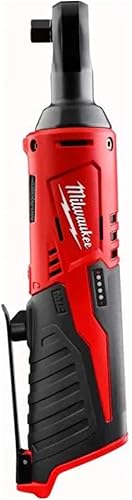

Milwaukee 2457-20 vs 2557-20: the quick verdict
The Milwaukee 2457-20 wins overall for most readers. It's rated at 35 ft-lb and 250 RPM, and it's the quicker of the two in free speed.
For a home mechanic doing valve covers, intake bolts and interior trim work, that combination is easier to live with.
The 2557-20 is the better pick when torque matters more than speed. Milwaukee rates the FUEL model at 55 ft-lb and 200 RPM, so it turns stubborn fasteners with more authority while spinning slower.
The overall score reflects that gap. The 2457-20 carries a 9.1 and the 2557-20 a 7.7, driven by the lower-torque tool's speed, slim head and simpler buying decision.
That score is the site's judgment of specs and features against what most shoppers need from an M12 ratchet, not a lab test.
Neither ratchet replaces an impact wrench for heavy work. Treat both as fastener runners for bolts you've already broken loose.
The two ratchets side by side
The table below lines up the specs that separate the 2457-20 and the 2557-20. The first difference that matters to most buyers is torque.
| Spec | Milwaukee 2457-20 | Milwaukee M12 FUEL 2557-20 |
|---|---|---|
| Torque | 35 ft-lb | 55 ft-lb |
| Free speed | 250 RPM | 200 RPM |
| Motor | Standard 12-volt | Brushless FUEL |
| Drive size | 3/8 in | 3/8 in |
| Head style | Low profile | Fixed square |
| Length | 9.47 in | 10.87 in |
| Weight | 16 oz (tool) | 5.7 lb (kit) |
| Batteries in the box | None | Two 2.0 Ah |
| Charger in the box | No | Yes |
| Case | No | Yes |
The torque gap is 20 ft-lb in favor of the FUEL model. The speed gap is 50 RPM in favor of the 2457-20.
Those numbers point in opposite directions. Torque decides whether the tool can turn a bolt without stalling; speed decides how long you wait while it runs the bolt in or out.
| Product | Best for | Torque | Speed | Drive size | Our score |
|---|---|---|---|---|---|
| Milwaukee 2457-20 M12 3/8-inch Ratchet | most home garages | 35 ft-lb | 250 RPM | 3/8 in | 9.1 |
| Milwaukee M12 FUEL 3/8-inch Ratchet 2BAT | higher torque jobs | 55 ft-lb | 200 RPM | 3/8 in | 7.7 |
Torque decides which ratchet you buy
If your fasteners are already broken loose, 35 ft-lb is enough; if you routinely meet resistance, the 55 ft-lb FUEL model is the safer buy. Torque is the one spec that most clearly separates these two tools.
The Milwaukee 2457-20 is rated at 35 ft-lb. That's in line with the air ratchets it's meant to replace for light assembly and disassembly work.
The 2557-20 steps up to 55 ft-lb. The extra 20 ft-lb gives it more headroom before it stalls on a tight bolt.
Think about the jobs you actually do. Removing and reinstalling valve covers, intake tubes, battery terminals and under-dash brackets is light fastening.
A 35 ft-lb tool handles that comfortably.
Working on suspension components, exhaust hardware or older vehicles with corroded bolts is different. There the higher torque rating gives the 2557-20 more room to work before you reach for a hand tool.
Where the 35 ft-lb rating fits best
The 2457-20 covers the bulk of routine garage and maintenance work. Its 35 ft-lb rating is aimed at nuts and bolts that were already loosened and just need to go back on.
It also works well on assembly tasks away from the vehicle. Furniture, machinery panels, electrical enclosures and light equipment all ask for controlled torque in this range.
Because the tool's power matches the job, you're less likely to over-tighten small hardware. That matters on plastic panels, small bracket bolts and anything threaded into soft metal.
When 55 ft-lb earns its keep
The 2557-20's higher rating helps on longer bolt runs and fasteners that fight back. A 55 ft-lb tool is more likely to finish the job without stalling mid-turn.
It's still not an impact wrench. Neither ratchet is rated for lug nuts, axle nuts or suspension bolts torqued past its limit.
The extra torque also adds weight. The FUEL kit weighs 5.7 lb as shipped with two batteries and a charger, against 16 oz for the bare 2457-20 tool.
Speed and size change how the tool feels in your hand
The 2457-20 spins faster and has a lower-profile head, which makes it the handier tool in cramped engine bays. Speed and head size matter more than most spec sheets admit.
The 2457-20 runs at 250 RPM. The 2557-20 runs at 200 RPM.
Over a long run of similar bolts, the faster tool finishes sooner and you spend less time holding the trigger.
Milwaukee lists a low-profile head design on the 2457-20, which is the feature that helps you get into an engine bay without fighting clearance. A slimmer head is the difference between reaching a bolt and not reaching it.
The 2457-20 also measures 9.47 inches long. The 2557-20 measures 10.87 inches.
In a packed engine bay, an inch and a half of extra length matters when you're working around accessories and hoses.
The recessed switch on the 2457-20
The 2457-20 puts its forward and reverse switch on the back of the head, recessed so it's harder to bump by accident. That's a small design choice with real consequences in tight spaces.
When your hand is wedged near a firewall or a manifold, an exposed switch can flip mid-job. The recessed placement on the 2457-20 reduces that risk.
The 2557-20 uses a fixed square head. It's a solid design, but the 2457-20's low-profile head and switch placement give it an edge when clearance is tight.
Weight and balance in the hand
The 2457-20 weighs 16 oz as a bare tool. Add an M12 battery you already own and it's still light enough to hold overhead for short stretches.
The 2557-20 kit figure of 5.7 lb includes two batteries, a charger and the case. That's the shipping weight of the whole kit, not the tool alone in your hand.
If you often work overhead or at full reach, the lighter bare tool is easier on your wrist. If you mostly work at bench height, the difference is less noticeable.
Battery kit vs bare tool: what's in the box
The 2557-20 arrives ready to use; the 2457-20 assumes you already own M12 batteries and a charger. This is the second big fork in the milwaukee 2457-20 vs 2557-20 choice.
The 2457-20 ships as a bare tool with no battery. If you're already on the M12 platform, that's an advantage: you buy the tool without paying again for packs and a charger you already have.
The 2557-20 kit includes two 2.0 Ah M12 Redlithium batteries, a charger and a case. For a first-time M12 buyer, that's a complete setup in one box.
Neither box includes a socket. You'll need your own 3/8-inch sockets either way, so factor that in when you plan the purchase.
The REDLINK and fuel gauge details on the 2457-20
The 2457-20 includes REDLINK Intelligence, a chip that talks to the M12 battery and limits power to prevent overheating. Milwaukee says it protects the tool from unnecessary damage.
It also has an onboard fuel gauge on the side. Lights show how much charge is left, so you can swap batteries before a job rather than mid-bolt.
An LED light on the front of the 2457-20 helps in dim engine bays. That's a practical feature when you're working under a hood at night.
The case and charger with the 2557-20 kit
The 2557-20's kit format suits anyone starting from zero. Two batteries let you keep one on charge while the other runs the tool.
The included case keeps the ratchet, batteries and charger together. That's handy if you move between a home garage and a job site.
If you already own M12 batteries, though, those extras add cost without adding capability. That's where the bare-tool 2457-20 pulls ahead for most readers.
Which M12 ratchet should you buy?
Buy the Milwaukee 2457-20 if you already own M12 batteries and do light fastening; buy the 2557-20 if you need more torque or want a complete kit. The choice is really about your battery drawer and your bolt sizes.
The 2457-20 is the better fit for most home mechanics. It's faster, has the lower-profile head for tight engine bays and doesn't make you pay for batteries twice.
The 2557-20 is the better fit for a first-time M12 buyer or anyone working on fasteners that need more than 35 ft-lb. The kit and the extra torque justify it for that group.
Buy the 2457-20 if you already own M12 batteries
If you have M12 packs from a drill, impact driver or another Milwaukee tool, the 2457-20 slots straight in. That's the simplest, most cost-effective path onto the ratchet.
It's also the pick if speed matters. The 250 RPM free speed and the slim head make it quicker and easier in tight spots.
Our full Milwaukee 2457-20 review goes deeper on the head design, the fuel gauge and the LED light. If you're still weighing the whole M12 range, the guide to which M12 ratchet is best lines up the options.
Buy the 2557-20 if you need torque and a kit
The 2557-20 makes sense when your work includes tighter fasteners. The 55 ft-lb rating gives you more margin before the tool stalls.
It's also the easier first purchase. Batteries, charger and case arrive together, so there's no separate shopping trip before you can use it.
If you're comparing motor types more broadly, our M12 ratchet vs M12 FUEL ratchet explainer covers what the brushless upgrade changes. And if you're still deciding between brands, the DeWalt vs Milwaukee cordless ratchet comparison puts them head to head.
The verdict: Milwaukee 2457-20 vs 2557-20
The Milwaukee 2457-20 is the better M12 ratchet for most buyers. It wins on speed, head clearance and buying simplicity for anyone already on the M12 platform.
Its 250 RPM free speed beats the FUEL model's 200 RPM. Its low-profile head and recessed switch help in tight engine bays.
And as a bare tool, it doesn't ask you to buy batteries you may already own.
The 2557-20 is still the right call in two cases: you need more than 35 ft-lb, or you want batteries and a charger in the box. For everyone else, the 2457-20 is the smarter buy.
That's the short version of the milwaukee 2457-20 vs 2557-20 question. Pick the 2457-20 for light, fast work with batteries you own, and the 2557-20 when torque or a complete kit matters more.
Our score weighs specs, features and buyer feedback against what you're shopping for. The 9.1 on the 2457-20 reflects how well its speed and slim head fit typical home garage work.
Frequently asked questions
Is the 2557-20 a brushless ratchet?
Yes. The Milwaukee M12 FUEL 2557-20 uses a brushless motor, which is part of what gives it its 55 ft-lb torque rating.
The 2457-20 runs a standard 12-volt motor rated at 35 ft-lb.
Do both ratchets use the same M12 batteries?
Yes. Both run on Milwaukee's M12 battery platform.
The 2457-20 ships as a bare tool without a battery, while the 2557-20 kit includes two 2.0 Ah batteries and a charger.
Which M12 ratchet is faster?
The 2457-20 spins at 250 RPM free speed, against 200 RPM for the 2557-20. That makes the non-FUEL ratchet quicker for running in and out long bolts, though the 2557-20 turns harder fasteners with more torque.
Can either ratchet break loose lug nuts?
Neither is meant for that. The 2457-20 is rated at 35 ft-lb and the 2557-20 at 55 ft-lb, well below typical wheel torque.
Use a breaker bar or a dedicated impact wrench for lug nuts, then finish with the ratchet.
Which Milwaukee M12 ratchet is better for tight engine bays?
The 2457-20 is the better fit there. Its low-profile head design and recessed forward and reverse switch on the back of the head help it slip into narrow spots without accidental actuation.


