Milwaukee 2457-20 vs DeWalt DCF513B Ratchet: Which Is Better? (November 2026)
The Milwaukee 2457-20 is the better overall pick for most users because it is lighter, shorter and built around a low-profile 12V design. Choose the DeWalt DCF513B when its 70 ft-lb torque and 20V MAX battery platform matter more than compact size.
On this page (13 sections)
- Milwaukee 2457-20 vs DeWalt DCF513B: quick comparison
- Which ratchet is better in tight spaces?
- Which cordless ratchet has more torque?
- Does speed matter more than torque here?
- Which tool is easier to carry and handle?
- Which battery platform should you choose?
- Which controls and lights help during work?
- How do the materials and motor designs differ?
- Who should buy the Milwaukee 2457-20?
- Who should buy the DeWalt DCF513B?
- How does the Milwaukee compare with other DeWalt and Milwaukee ratchets?
- Milwaukee 2457-20 vs DeWalt DCF513B: final verdict
- If stubborn fasteners and higher output are the problem, buy the DeWalt.
The Milwaukee 2457-20 is the better overall pick for most users because it is lighter, shorter and easier to position in tight spaces. The DeWalt DCF513B wins when its 70 ft-lb torque and DEWALT 20V MAX battery platform fit your work better.
Both tools are cordless 3/8-inch ratchets for fastening and removing nuts, bolts and other fasteners. The choice comes down to torque, working space and the battery system you already use.
The Milwaukee produces 35 ft-lb of torque at 250 RPM. The DeWalt produces up to 70 ft-lb through a brushless motor, giving it twice the stated torque.
Milwaukee 2457-20 vs DeWalt DCF513B: quick comparison
The Milwaukee 2457-20 wins for compact daily work, while the DeWalt DCF513B wins for higher torque. Their shared 3/8-inch drive makes socket compatibility simple, but their size and battery systems suit different users.
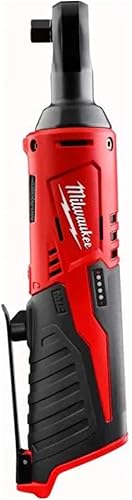
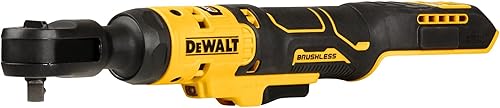
| Feature | Milwaukee 2457-20 | DeWalt DCF513B |
|---|---|---|
| Drive size | 3/8 inch | 3/8 inch |
| Torque | 35 ft-lb | 70 ft-lb |
| Speed | 250 RPM | Variable speed trigger |
| Length | 9.47 inches | 15.79 inches |
| Weight | 16 ounces | 2.6 pounds |
| Battery platform | Milwaukee M12 | DEWALT 20V MAX |
| Motor information | 12-volt motor | Brushless motor |
| Head design | Low profile | Low profile |
| Work light | Front LED | Onboard LED |
| Battery and charger | Battery not included | Battery and charger not included |
The figures show the central trade-off. The DeWalt has more torque and a brushless motor, while the Milwaukee is much shorter and lighter.
The Milwaukee also has a 250 RPM speed figure. The DeWalt uses a variable speed trigger, giving control over how quickly it runs.
Which ratchet is better in tight spaces?
The Milwaukee 2457-20 is the better choice for tight engine bays and cramped repair areas. Its 9.47-inch length, 16-ounce weight and low-profile head make it easier to position.
The Milwaukee's low-profile head is made for engine-bay work. Its recessed forward-backward switch sits on the back of the head and helps reduce accidental actuation.
A shorter tool leaves more room between the ratchet and nearby parts. It also reduces the tool extending behind your hand when you change grip or reposition the socket.
The DeWalt also has a compact build and low-profile head for hard-to-reach fasteners. However, its 15.79-inch length is much greater than the Milwaukee's 9.47 inches.
That extra length can help when a fastener sits farther inside a work area, but it can be harder to place where nearby parts leave only a narrow path.
If fitting into a crowded engine bay is your priority, choose the Milwaukee. Our Milwaukee 2457-20 review looks more closely at the compact M12 design.
Which cordless ratchet has more torque?
The DeWalt DCF513B is the clear torque winner, with up to 70 ft-lb compared with 35 ft-lb for the Milwaukee. Pick it when higher output is a main reason for using a cordless tool.
Torque affects how much turning force the tool can apply to a fastener. The DeWalt's stated maximum gives it a large advantage for demanding fastening and removal work.
The Milwaukee's 35 ft-lb figure suits users who value a sub-compact tool for routine work. Its 12-volt motor keeps the design small, while 250 RPM helps with repeated fastening.
Neither torque figure means you should force a stuck fastener beyond safe limits. A cordless ratchet can run a fastener on or off, while final tightening should follow the job's requirements.
The DeWalt's higher output comes with a larger body and heavier weight. More power helps only if the tool still fits the work area.
Choose the DeWalt for torque-first work. Choose the Milwaukee when 35 ft-lb covers your tasks and a smaller tool saves more time.
Does speed matter more than torque here?
The Milwaukee has the clearer stated speed advantage because it reaches 250 RPM, while the DeWalt uses a variable speed trigger without a stated RPM figure here. That makes the Milwaukee attractive for repeated fastening.
A 250 RPM rating describes how quickly the ratchet can turn under its stated conditions. Faster rotation can reduce time spent running a nut down after the threads have started.
The DeWalt's variable speed trigger gives you control over the tool's pace. That helps you start gently, work around sensitive parts and adjust handling as the fastener changes.
These are different strengths rather than direct substitutes. The Milwaukee gives a clear speed figure, while the DeWalt gives trigger control alongside higher torque.
Use the Milwaukee for quick routine work. Use the DeWalt when trigger control and extra turning force matter more than a published speed number.
Which tool is easier to carry and handle?
The Milwaukee 2457-20 is easier to carry for long periods because it weighs 16 ounces. The DeWalt DCF513B weighs 2.6 pounds, so its higher power comes with a handling trade-off.
Weight matters when you carry the ratchet between work areas, keep it in a tool bag or hold it at arm's length. A 16-ounce tool puts less load on your wrist.
The Milwaukee also measures 9.47 inches long. Its shorter body makes it easier to place in a crowded area and reduces the reach needed to support it.
The DeWalt's weight is tied to a 20V MAX design with a brushless motor and 70 ft-lb torque. That is reasonable for users who need stronger output and already use larger DEWALT tools.
Handling depends on the whole tool, including the battery attached to it. Both products are tool-only options, so the added battery becomes part of the setup.
For a portable ratchet, the Milwaukee is the better fit. For a shop setup where torque matters more, the DeWalt's heavier design is easier to justify.
Which battery platform should you choose?
Choose the battery platform you already use, unless the tool's size or torque changes the decision. The Milwaukee uses an M12 battery, while the DeWalt works with DEWALT 20V MAX batteries and chargers.
The Milwaukee 2457-20 is built around the M12 system. Its onboard fuel gauge shows remaining power through side lights, helping you judge when to change or charge the battery.
The Milwaukee battery is not included. That makes it a better fit for someone who already owns M12 batteries or wants a compact 12V setup.
The DeWalt DCF513B works with all DEWALT 20V MAX batteries and chargers. Its battery and charger are also not included.
Battery systems affect more than one ratchet. If you already own several M12 or 20V MAX tools, staying with that platform can reduce the number of chargers and battery types in your workspace.
If you own M12 packs, choose the Milwaukee. If you own DEWALT 20V MAX packs, choose the DeWalt unless the Milwaukee's shorter, lighter body better matches your jobs.
Which controls and lights help during work?
The Milwaukee offers a fuel gauge, front LED and recessed direction switch, while the DeWalt combines an LED work light, variable speed trigger and trigger lock. The better layout depends on whether you value battery information or activation protection.
The Milwaukee's onboard fuel gauge uses side lights to show remaining power. Its front LED helps illuminate dim work areas, while the recessed switch helps prevent accidental actuation.
The DeWalt has an onboard LED work light for darker spaces. Its variable speed trigger lets you adjust the tool's speed through the trigger.
The DeWalt also has a trigger lock that helps prevent accidental activation when applied. That is useful when carrying, setting down or repositioning the tool.
Both tools provide lighting for restricted work areas. Choose the Milwaukee for the fuel gauge and recessed direction switch, or the DeWalt for its trigger lock and variable speed control.
How do the materials and motor designs differ?
The DeWalt has the stronger stated motor design, with a brushless motor and glass-filled nylon housing. The Milwaukee focuses on a sub-compact body with alloy steel and plastic materials, reinforced steel housing and REDLINK intelligence.
The DeWalt's brushless motor is paired with up to 70 ft-lb of torque. Its glass-filled nylon housing helps combat damage caused by some oils and solvents.
The Milwaukee uses a 12-volt motor and produces 35 ft-lb of torque. Its data identifies alloy steel and plastic materials, along with reinforced steel housing.
Milwaukee's REDLINK intelligence uses a smart chip to communicate with the M12 battery. The data says this helps prevent too much power and overheating that could cause damage.
DeWalt emphasizes brushless power, solvent-resistant housing and higher torque, while Milwaukee combines a smaller form with battery communication and a 35 ft-lb output.
Choose DeWalt when the motor and housing details match demanding shop work. Choose Milwaukee when the compact shape and M12 system matter more.
Who should buy the Milwaukee 2457-20?
Buy the Milwaukee 2457-20 if you work in tight spaces, carry your tools often or already use Milwaukee M12 batteries. It suits users who want a short, light ratchet for routine 3/8-inch socket work.
Its 9.47-inch length and 16-ounce weight are the main reasons to choose it. Those numbers make it easier to position and carry than the longer, heavier DeWalt.
The 35 ft-lb torque suits users whose work does not demand the DeWalt's 70 ft-lb maximum. Its 250 RPM speed fits repeated fastening where quicker rotation helps.
The low-profile head, front LED, recessed direction switch and onboard fuel gauge add practical value in cramped areas.
The trade-off is clear. You give up the DeWalt's higher torque and brushless motor, and the battery is not included.
If those limits fit your work, the Milwaukee is the better balanced choice. It earns the higher score because its compact size, lower weight and useful controls suit everyday cordless-ratchet work.
Who should buy the DeWalt DCF513B?
Buy the DeWalt DCF513B if you need 70 ft-lb of torque or already own DEWALT 20V MAX batteries and chargers. It suits demanding fastening work where output matters more than the smallest body.
The brushless motor gives the DeWalt a clear power advantage over the Milwaukee's 35 ft-lb figure. Its low-profile head and compact build still help it reach difficult fasteners.
The variable speed trigger controls the working pace. The onboard LED brightens the work area, and the trigger lock helps prevent accidental activation when applied.
The glass-filled nylon housing helps combat damage caused by some oils and solvents, which fits automotive work where shop fluids may be present.
The trade-off is size and weight. At 15.79 inches and 2.6 pounds, it takes more room and asks more of your wrist than the Milwaukee.
The DeWalt makes sense when your battery system or torque needs outweigh portability. Our DeWalt DCF513 review covers the ATOMIC ratchet in more detail.
How does the Milwaukee compare with other DeWalt and Milwaukee ratchets?
The key comparison here is compact M12 portability against higher 20V MAX torque. Other model comparisons help when you already prefer one brand but are still choosing a cordless ratchet.
The Milwaukee 2457-20 is a 3/8-inch M12 ratchet with 35 ft-lb torque, 250 RPM and a 9.47-inch length. Its purpose is to keep the tool small and light for restricted work.
The DeWalt DCF513B is a 3/8-inch 20V MAX ratchet with up to 70 ft-lb torque, a brushless motor and a 15.79-inch length. It provides more output while retaining a low-profile head and cordless operation.
If you are choosing between the brands more broadly, our DeWalt vs Milwaukee ratchet comparison puts the platform decision into a wider context.
If you already use Milwaukee M12 tools, compare the 2457-20 with the Milwaukee 2457-20 vs 2557-20 guide before choosing another M12 model.
Milwaukee 2457-20 vs DeWalt DCF513B: final verdict
The Milwaukee 2457-20 wins overall for most readers because its 9.47-inch length, 16-ounce weight, 250 RPM speed and low-profile design make it easier to use across routine repair work. It is the better choice when compact handling is the main goal.
Choose the DeWalt DCF513B when you need up to 70 ft-lb of torque, want a brushless motor or already use DEWALT 20V MAX batteries and chargers. Its 2.6-pound weight and 15.79-inch length are fair trade-offs for higher output.
The Milwaukee wins for tight engine bays, frequent carrying and users who value a small 12V tool. The DeWalt wins for torque-first work and people building around the 20V MAX system.
For the milwaukee 2457-20 vs dewalt dcf513b decision, start with the job that causes the most trouble. If clearance and fatigue are the problem, buy the Milwaukee.
If stubborn fasteners and higher output are the problem, buy the DeWalt.
Frequently asked questions
Are the Milwaukee 2457-20 and DeWalt DCF513B both 3/8-inch ratchets?
Yes. Both are cordless 3/8-inch ratchets, so they use the same drive size for compatible 3/8-inch sockets.
Their main differences are the battery platform, torque, speed, length and weight.
Which battery does the Milwaukee 2457-20 use?
The Milwaukee 2457-20 uses a Milwaukee M12 battery. The battery is sold separately, so choose it when you already have M12 packs or plan to build that battery system.
Which battery does the DeWalt DCF513B use?
The DeWalt DCF513B works with DEWALT 20V MAX batteries and chargers. Its battery and charger are sold separately, making it a natural fit for users who already own that platform.
Does the DeWalt DCF513B have a brushless motor?
Yes. The DCF513B has a brushless motor and delivers up to 70 ft-lb of torque.
That output gives it a clear advantage when your work regularly involves more demanding fastening or removal.
Which cordless ratchet is easier to carry?
The Milwaukee 2457-20 is easier to carry because it weighs 16 ounces and measures 9.47 inches long. The DeWalt weighs 2.6 pounds, so the Milwaukee has the stronger portability advantage.


