How to Use a Grease Gun on a Zerk Fitting
Here's how to use a grease gun: clean the Zerk, connect the coupler straight, and pump slowly to the equipment maker's stated amount. Stop for unexpected resistance, then release the coupler as directed.
On this page (9 sections)
- How to use a grease gun, step by step
- What should you check before connecting the gun?
- How should the coupler sit on the fitting?
- How much grease should you pump?
- When should you stop pumping?
- How do you remove the coupler without damaging the Zerk?
- What if grease won't go into the fitting?
- How can you reach awkward fittings and care for the gun?
- Which setup should you choose for your next grease job?
Here's how to use a grease gun on a Zerk fitting: clean the fitting, connect straight, and pump slowly to the equipment maker's stated amount. Release the coupler as directed, then wipe away excess grease.
A Zerk is the small fitting that feeds grease into a joint through a spring-loaded ball. Good technique keeps dirt out and avoids forcing extra grease past seals.
How to use a grease gun, step by step
Follow the machine's grease type, amount, and service interval, then work through each fitting in a set order. Secure the equipment against movement or accidental starting before servicing it.
- Find the service point and confirm its lubrication instructions.
- Wipe the Zerk and coupler with a clean rag.
- Align the coupler with the fitting and attach it as directed.
- Support the hose without pulling sideways on the Zerk.
- Pump slowly and watch for the stated amount or stop cue.
- Stop pumping, release the coupler as directed, and wipe the area clean.
Wear eye protection and keep fingers away from pressurized connections. Never feel for a leak with your hand; grease injected under the skin needs immediate emergency medical care, even if the wound looks small.
How to use a grease gun for the first time
Start with an easy-to-reach fitting so you can see the connection and control the gun. Identify the stop point before pressing the trigger or moving the handle.
Keep a simple service list if the machine has several fittings. A fixed route helps prevent missed joints and accidental double greasing.
What should you check before connecting the gun?
Check the grease, gun, and fitting before adding pressure. The wrong lubricant or dirt pushed into a joint can create a problem even when the coupler fits correctly.
Use the grease specified by the equipment maker. Don't assume two greases are compatible because they share a color, and don't mix them unless their compatibility is confirmed.
Inspect the hose for cracks, bulges, or worn areas, and check that connections are secure. Replace damaged parts before use rather than trying to contain a leak.
If the barrel is empty, learn how to load a grease gun before starting. After loading, prime it according to its manual until grease flows steadily, directing discharge into a suitable container away from your body.
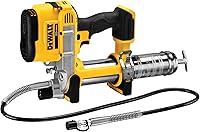
The DeWalt suits frequent maintenance with many service points because its variable speed trigger controls flow and its foot lets you rest it on a flat surface. The air-bleeder valve assists with priming after cartridge changes.
It's a tool-only model, so plan for a compatible battery and charger if you don't already have them. Skip it if you grease only a few accessible fittings occasionally and a manual gun meets your needs.
For model-specific setup, follow our guide to priming a DeWalt grease gun. Our DeWalt DCGG571B review covers the tool in more detail.
How should the coupler sit on the fitting?
Seat the coupler straight on the Zerk without side pressure. A crooked connection can leak, slip off, or strain the fitting.
With a standard push-on coupler, follow its attachment directions and press it into place without bending the Zerk. With a locking model, operate the lever as directed so the jaws can engage.
Check clearance around the fitting before pumping. You need enough space to attach the coupler, operate its release, and remove it afterward.
Choose this LockNLube if holding a coupler in place makes operating your gun awkward, especially with a manual lever gun. It works with SAE and metric Zerks, uses a 1/8 in NPT connection, and includes a spare rebuild kit.
Skip it if your existing coupler seals well and releases easily, or if its body won't clear nearby parts. Its 10,000 psi rating is a component limit, not a target pressure for the joint.
How much grease should you pump?
Use the amount specified for that service point, rather than filling every joint until grease escapes. Some components require a measured amount, while others use fresh grease at a designated outlet as the stop cue.
A pump count works only when it matches the output of your gun. Don't transfer a manual gun's stroke count to a battery gun or assume different manual guns deliver equal amounts.
Use short, controlled strokes or trigger presses. Pause often enough to check progress, especially around sealed components where excess grease has nowhere useful to go.
This version suits buyers who want a locking connection without keeping a spare rebuild kit on hand. It's rebuildable, but the spare kit isn't included.
It shares the other LockNLube's thread and fitting compatibility, so choose between them based on spare-parts needs. Skip this version if you want replacement parts ready for the next service.
A locking connection helps hold the hose in place; it doesn't measure how much grease enters the joint. Keep watching the equipment's stop cue.
When should you stop pumping?
Stop at the required amount, or sooner if resistance rises unexpectedly, grease leaks, or a seal starts moving. More pressure isn't the next step when grease won't enter.
If grease escapes around the coupler, stop and follow the gun's pressure-relief procedure before reseating it. That leak may come from poor alignment, a worn coupler, or a damaged fitting.
Don't keep pumping just because a gun can produce high pressure. The fitting, hose, seals, and equipment passage all have their own limits.
How do you remove the coupler without damaging the Zerk?
Stop pumping and use the coupler's release mechanism before pulling it away. Keep the hose supported so its weight doesn't pull sideways on the fitting.
Some standard jaw couplers need a gentle twist or slight angle to release. Locking models use their lever, but follow the instructions for your exact coupler.
If it remains stuck, follow the gun's pressure-relief procedure before trying again. Don't yank the hose, pry against the fitting, or loosen a pressurized connection to make it release.
What if grease won't go into the fitting?
Separate a gun-flow problem from a fitting problem before replacing parts. After relieving pressure and disconnecting as directed, check the gun's output using its manual's priming procedure.
If grease won't leave the gun, trapped air or an empty cartridge may be the cause. If it flows steadily when disconnected but won't enter the joint, inspect the coupler fit and Zerk next.
A blocked or damaged fitting may need replacement under the equipment's service procedure. Match its thread size, thread type, angle, and clearance to the original.
This kit suits maintenance across several machines when you already know which replacement fittings they use. The assortment covers 1/4 in, 1/8 in, M6, M8, and M10 sizes.
Skip it if you need one known fitting or a size outside the assortment. Never force a nearly matching thread into the machine; similar diameter doesn't mean the thread pitch and form match.
If a correct replacement still won't accept grease, stop and have the passage checked. A fresh fitting won't clear a blockage farther inside the component.
How can you reach awkward fittings and care for the gun?
Choose access equipment that lets the coupler attach and release without bending the Zerk. A flexible hose helps around obstacles, while a recess may need a suitable adapter.
Route the hose without sharp bends or tension. Don't reach near moving parts, and check access with the equipment safely secured before starting.
If you're choosing a powered tool, our cordless grease gun buying guide explains the main choices. The best cordless grease guns guide helps compare options for different workloads.
After use, wipe the coupler and fittings clean and replace any protective caps. Store the gun where dirt can't enter the coupler, and label guns by grease type if you use more than one lubricant.
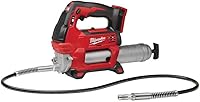
Follow the gun manual for storage and pressure relief. For Milwaukee cartridge changes, use our guide to loading a Milwaukee grease gun.
Which setup should you choose for your next grease job?
Choose the part that solves your actual problem: attachment, replacement fittings, or repeated pumping. Learning how to use a grease gun doesn't require replacing a working setup.
- Choose the LockNLube with the spare rebuild kit if you want a locking coupler and service parts ready.
- Choose the LockNLube without the spare kit if you want the locking connection and will handle parts later.
- Choose the fitting assortment if you maintain several machines with confirmed matching Zerk sizes.
- Choose the DeWalt if frequent greasing makes trigger operation useful and you can support its battery needs.
Keep your current gun if it delivers grease reliably and reaches the fittings safely. If flow is still the problem, work through why a cordless grease gun may not pump before buying another tool.
Frequently asked questions
How do you attach a grease gun to a Zerk fitting?
Clean the Zerk and coupler, align them straight, and connect them using the coupler's instructions. Open the lever first on a locking model, then release it to grip the fitting.
If the coupler won't seat, check clearance, alignment, and fitting damage before trying again.
How much grease should you pump into a Zerk fitting?
Use the equipment maker's amount and stop cue for that specific service point. A measured quantity, a suitable pump count, or fresh grease at a designated outlet may be required.
Don't fill every joint until grease escapes, and stop early if resistance rises unexpectedly.
Why won't grease go into a Zerk fitting?
A poor connection, trapped air in the gun, a blocked Zerk, or a clogged passage can stop grease flow. Stop pumping and follow the gun's pressure-relief procedure before checking the connection.
If the gun delivers grease when disconnected as directed, inspect the fitting and equipment passage next.
How do you remove a grease gun coupler from a Zerk?
Stop pumping and follow the coupler's release instructions before pulling it away. Use the lever on a locking coupler; some standard jaw couplers release with a gentle twist or slight angle.
If it stays stuck, follow the gun's pressure-relief procedure instead of pulling harder or prying against the Zerk.