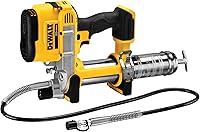
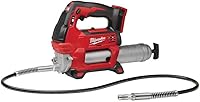
DeWalt vs Milwaukee Cordless Grease Gun: Which Is Better? (November 2026)
For DeWalt grease gun vs Milwaukee grease gun, choose DeWalt for trigger-controlled flow and Milwaukee for repeated lubrication rounds with its preset grease counter. Start with your compatible batteries, then decide whether hose reach or dispensing controls justify choosing the other platform.
On this page (10 sections)
- DeWalt grease gun vs Milwaukee grease gun: which fits your work?
- Who should buy DeWalt, and who should skip it?
- Who should buy Milwaukee, and who should skip it?
- Which grease gun reaches awkward fittings more easily?
- How much do pressure, flow and the counter matter?
- When does Ryobi make more sense?
- How should you set up either gun for the first job?
- How do you avoid mess and overgreasing?
- What care keeps either grease gun ready?
- DeWalt or Milwaukee grease gun: make the final choice
For DeWalt grease gun vs Milwaukee grease gun, choose DeWalt for varied jobs with trigger-controlled flow, or Milwaukee for repeated lubrication rounds where a preset grease counter helps manage amounts. Your existing batteries should guide the choice unless a specific access or control need points elsewhere.
The DCGG571B and 2646-20 both suit powered lubrication work, but their controls favor different routines. Think about the fittings you service, how you reach them and how you decide when to stop pumping.
Both versions are tool only, so include compatible batteries and charging equipment in your buying decision.
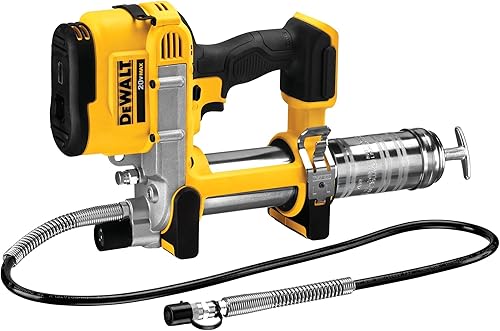
 Best for repeated lubrication rounds
Milwaukee 2646-20 M18 2-Speed Grease Gun
DeWalt grease gun vs Milwaukee grease gun: which fits your work?
DeWalt suits mixed maintenance tasks; Milwaukee suits planned rounds with repeated grease amounts. Neither is the automatic choice for every truck, tractor or workshop.
DeWalt makes sense when you move between different lubrication points and want to adjust output as you go. Its variable speed trigger puts that adjustment at your finger rather than asking you to choose one flow setting for the whole job.
Milwaukee earns its place when your maintenance routine has a clear sequence of fittings and specified grease amounts. Its preset counter gives you a way to manage dispensing without relying only on how long you hold the trigger.
A counter doesn't decide what a bearing needs. Use the equipment's service instructions to establish the amount and interval before choosing the control that helps you follow them.
DeWalt vs Milwaukee grease gun: when should batteries decide?
Stay with your compatible battery platform when both tools meet your access and dispensing needs. Avoid adding another charging routine for a feature you won't use.
DeWalt uses the 20V MAX platform, while Milwaukee uses M18 REDLITHIUM batteries. Confirm the exact pack fits the tool, and check that you have a suitable charger.
If you own neither system, consider the complete setup and other tools you expect to need. Don't choose between them by comparing the voltage numbers as though they measure grease delivery.
Who should buy DeWalt, and who should skip it?
Buy DeWalt if you want to vary flow while moving between different tasks. It fits a routine where careful trigger use matters more than a preset counter.
The integrated foot lets you rest the gun on a flat surface while working with the hose. That helps when a stable resting place is available beside the machine.
A shoulder strap is included, giving you another way to support the tool as you move. Plan where the hose will run so it doesn't catch on nearby parts.
Skip DeWalt if your main reason for buying is to manage repeated amounts with a counter. Its trigger controls flow, but it doesn't replace the Milwaukee's preset dispensing feature.
It also makes less sense if your fittings are beyond comfortable hose reach from a safe working position. Read our DeWalt DCGG571B review for a closer look at its controls and layout.
Who should buy Milwaukee, and who should skip it?
Buy Milwaukee if repeated lubrication points and awkward access shape your workday. Its counter and extra hose reach address those needs directly.
The 2-speed design lets you choose between maximum pressure and maximum flow. Use the setting suited to the task rather than assuming the faster option belongs on every fitting.
Milwaukee also has a lock-on/lock-off trigger and plunger rod markings to gauge the grease left in the barrel. Those features help you plan a longer round, though you still need to monitor each connection.
Skip Milwaukee if you only service a few easy-to-reach fittings and won't use the counter. Existing DeWalt batteries can be a stronger reason to choose DeWalt than adding features your routine doesn't need.
Consider support and carrying needs too: Milwaukee weighs 9 lb and has a stand-up design with shoulder strap capability. Our Milwaukee 2646-20 review explains where its feature set fits.
Which grease gun reaches awkward fittings more easily?
Milwaukee gives you more hose reach, with 48 in compared with DeWalt's 42 in. That difference matters most when the gun must stay farther from the lubrication point.
Measure the route the hose will actually take. A straight measurement across open air can miss the distance needed to go around a frame rail, guard or nearby part.
Leave enough slack to connect the coupler squarely without pulling sideways on the fitting. A hose that barely reaches can make connection and removal harder even if its stated length covers the gap.
Reach also includes room for your hand and coupler. More hose won't solve a fitting that has no usable approach angle.
Check your hardest fitting before you choose
Use the least accessible fitting on your regular route as your buying reference. Identify a stable place for the tool, then check the path from there to the fitting.
Don't plan a hose route across moving parts or a hot surface. Secure the machine against movement and follow its service instructions before reaching into restricted areas.
For a wider comparison of access and handling features, use our cordless grease gun buying guide.
How much do pressure, flow and the counter matter?
Pressure helps move grease against resistance; flow describes how quickly grease is delivered. Both main tools reach up to 10,000 PSI, so pressure alone doesn't choose a winner.
DeWalt's pump delivers up to 5.0 oz/min. Milwaukee offers its pressure and flow speed choices, but there's no numerical Milwaukee flow figure here to support a direct speed ranking.
Maximum output is useful when a lubrication point calls for more grease. Small quantities call for restraint, since a powered gun can deliver too much before you notice.
Don't estimate a bearing's dose by multiplying a maximum flow figure by trigger time. Working resistance, control settings and the condition of the grease path affect delivery.
A counter helps follow a plan
Milwaukee's preset counter is useful when you already know the amount each point requires. Make a service list that pairs each fitting with its specified grease, amount and interval.
Check the counter instructions before relying on a setting, especially after loading or clearing air. Grease discharged while priming isn't grease delivered into the component.
For either gun, follow the equipment's stated stopping point. Some joints use visible grease movement as a cue, while other components need a specified amount and should not be filled until grease escapes.
When does Ryobi make more sense?
Consider Ryobi if you already have compatible batteries and your fittings are easy to approach. It offers another route into powered greasing without making this a reason to change platforms.
The P3410 has a 30 in hose and a maximum flow of 7.5 oz/min. That makes hose access a key check before choosing it for equipment with recessed fittings.
Its steel grease tube, LED work light and plunger rod markings cover useful everyday needs. Choose it for a routine that fits those features, rather than choosing by maximum flow alone.
Skip it if your work requires placing the gun farther from the fitting. A higher flow figure won't compensate for a hose that doesn't comfortably reach.
How should you set up either gun for the first job?
Choose the correct grease, load cleanly and prime the pump before connecting to equipment. Both DeWalt and Milwaukee have an air-bleeder valve to help clear trapped air.
Start with the machine's lubrication chart. Match its grease requirements rather than choosing a cartridge only because it fits the gun.
If you service equipment needing different greases, label the guns clearly or keep a clear changeover routine. Greases aren't automatically compatible just because their colors look alike.
Clean around the barrel opening before loading, and keep grit off the cartridge and exposed grease. Follow the model's instructions for handling the follower rod, fitting the cartridge and reassembling the barrel.
Prime into a suitable waste container until grease flows as directed in the manual. Our guide to loading a cordless grease gun covers the basic sequence.
Use the right model's loading steps
Follow the exact procedure for your tool rather than assuming every cordless gun loads the same way. Follower rod and barrel handling should follow the manufacturer's directions.
Use our Milwaukee loading guide or DeWalt priming guide for focused help. If output stops after a cartridge change, check for trapped air before assuming the motor or pump has failed.
How do you avoid mess and overgreasing?
Clean the fitting, seat the coupler fully and dispense only what the component needs. Careful connection prevents wasted grease and makes it easier to spot a delivery problem.
Wipe dirt from the zerk before attaching the coupler. Otherwise, grease can carry that dirt into the joint.
Check that the coupler sits squarely and grips as directed. Grease escaping around the connection is a reason to stop and check the fit, not a reason to pump harder.
Use short, controlled input where small amounts are needed. Pay attention to the service instructions, the connection and the component rather than watching only the tool.
Our guide to using a grease gun on a zerk fitting explains the connection and dispensing steps.
Don't force grease through every blockage
Stop if a fitting refuses grease or pressure builds without normal delivery. A blocked fitting, poor connection or restricted passage needs attention before more pumping.
Follow the tool's pressure-release procedure before disconnecting or inspecting components. Never check a pressurized leak with your fingers, because injected grease can cause serious injury.
Keep replacement fittings and couplers suited to the equipment and tool. Changing parts without checking compatibility can create another leak or access problem.
What care keeps either grease gun ready?
Keep dirt out, protect the hose and investigate poor output before continuing. These habits matter with either brand and help prevent avoidable interruptions.
Wipe the coupler after use and keep the barrel area clean before the next refill. Store cartridges where their ends stay protected from dust and debris.
Inspect the hose and coupler for damage before use. Don't carry the gun by its hose or store it with the hose pinched beneath other tools.
Remove the battery before maintenance or clearing a problem, following the manual. Use the specified pressure-release steps before opening any part of the grease path.
Separate an empty barrel from trapped air
If the motor runs but grease stops, check the remaining grease and follow the priming procedure. Repeatedly holding the trigger doesn't correct an empty cartridge or an air pocket.
For a fuller fault check, see why a cordless grease gun may not pump. Work through loading, priming and connection checks before replacing parts.
Both tools include an LED for dim work areas, but arrange enough light to inspect the fitting and hose path. Seeing the connection clearly helps you catch leakage early.
DeWalt or Milwaukee grease gun: make the final choice
Choose DeWalt for varied jobs with flow adjusted at the trigger; choose Milwaukee for a repeatable lubrication route built around specified amounts. Buy for the task that takes the most care or causes the most delay in your current routine.
In the DeWalt grease gun vs Milwaukee grease gun decision, let compatible batteries settle a close choice. Change platforms only when the other tool's controls or reach solve a clear problem on your equipment.
Before ordering, identify your hardest fitting, confirm the grease requirements and decide where the gun will rest during use. Those checks tell you more about fit than choosing the largest maximum figure.
If neither tool matches that plan, compare the alternatives in our best cordless grease guns guide.
Frequently asked questions
Is the DeWalt or Milwaukee grease gun more powerful?
Neither wins on maximum pressure: both reach up to 10,000 PSI; DeWalt has a maximum flow rate of 5.0 oz/min, while Milwaukee offers separate speed choices for maximum pressure or flow. Choose around your lubrication tasks and controls rather than treating equal pressure figures as equal working speed.
Which cordless grease gun has the longer hose?
Milwaukee has the longer hose, at 48 in compared with DeWalt's 42 in; that extra reach matters when you need to keep the gun on a stable surface away from the fitting. Measure the actual hose route around parts, leaving slack for the coupler to connect straight.
Does the Milwaukee grease gun measure grease?
Milwaukee's preset grease counter helps control the amount dispensed, but your equipment's lubrication instructions still determine the amount needed. Follow Milwaukee's directions for setting and using the counter; avoid copying one setting across every fitting, since different lubrication points can need different amounts and service intervals.
Can you use either grease gun without its battery?
No, each needs a compatible battery, and these versions are sold as tool-only models; DeWalt uses its 20V MAX platform, while Milwaukee uses an M18 REDLITHIUM pack. Check exact battery compatibility and arrange a suitable charger before buying, especially if this would be your first tool on that platform.
Which grease gun should you choose?
Choose DeWalt for varied work where you want to adjust flow with the trigger; choose Milwaukee for repeated lubrication rounds where its counter and longer hose earn their place. If neither matches your battery setup or hose needs, compare alternatives in our best cordless grease guns guide.